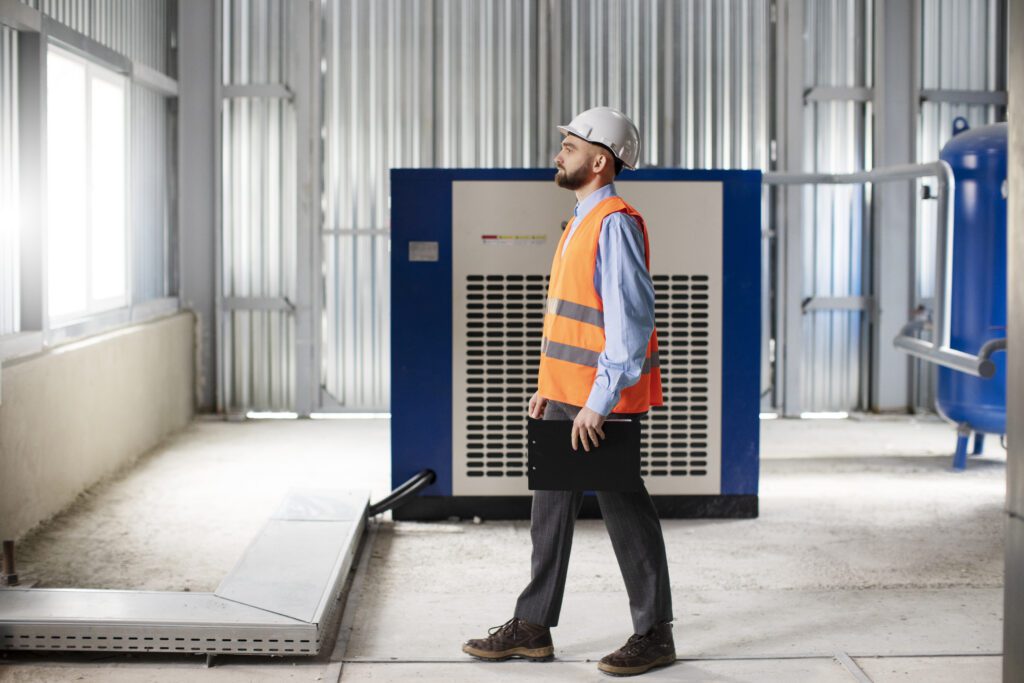

Common PUWER Non-Compliances Found On Factory Machinery

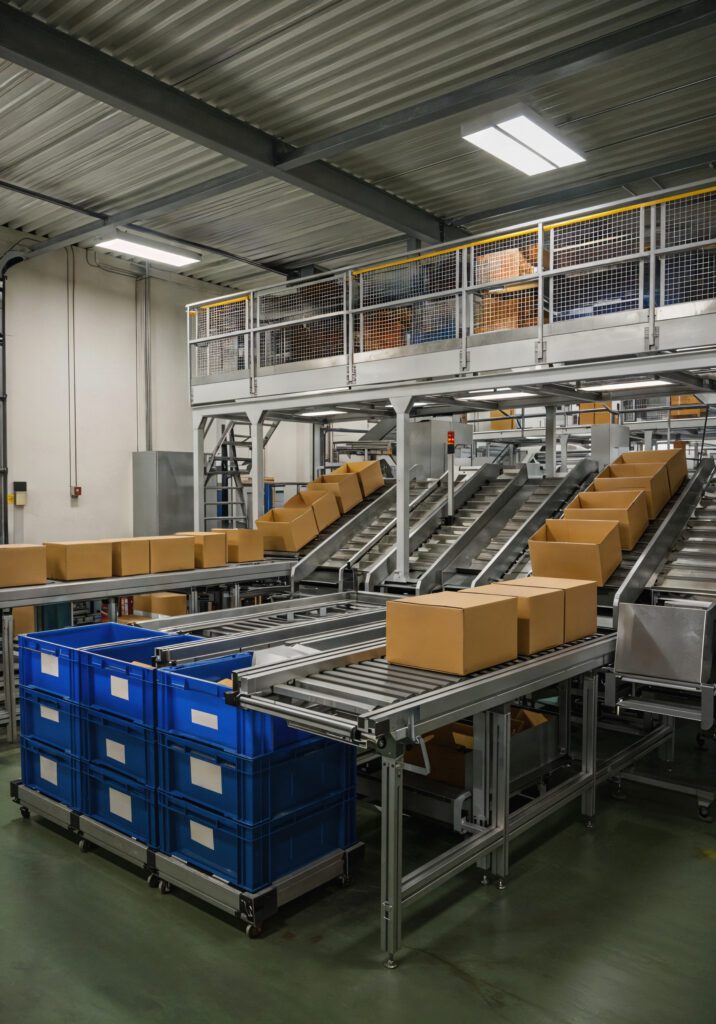
Warehouse sorting system
PUWER 1998 · Work equipment

Common PUWER Non-Compliances Found On Factory Machinery

On paper, most factory machines are compliant. On the floor, the picture is rarely so tidy. These are the PUWER faults we find again and again, what each one breaches, and how to put it right.

Published by SEIS Engineering, independent competent person inspections. Reviewed May 2026.

Walk almost any production line with an inspector's eye and a pattern shows up within minutes. A fixed guard with two of its four bolts missing. An emergency stop tucked behind a stillage of finished goods. An isolator that was never the lockable kind. None of it appears in the risk assessment, because the risk assessment was written the week the machine was installed, and the line has been earning its keep ever since.

That distance between the paperwork and the shop floor is where almost every PUWER problem lives. PUWER, the Provision and Use of Work Equipment Regulations 1998, is the law that says work equipment must be suitable, safe, properly maintained and used only by trained people. We set out the full duties in our PUWER regulations guide. What follows is the narrower and more useful list: the non-compliances that actually turn up on factory machinery, in roughly the order an inspector would notice them.

What non-compliance really looks like on the floor

Guarding comes first, and not by accident. Regulation 11, dangerous parts of machinery, is the most commonly cited regulation in PUWER prosecutions, and it is almost always the first thing an inspector turns to. The reason is the harm behind it: the HSE describes how moving machinery draws people in, severs and crushes, and an unguarded or overridden guard is the usual route to an amputation.

The guard that is not really a guard

The most common finding is a guard that has quietly stopped doing its job. Bolts have gone missing so it lifts off in seconds. It has been trimmed to let a longer workpiece feed through. Or the mesh was always a touch too coarse, so a hand can reach the moving part through it. Regulation 11 does not ask whether a guard is fitted, it asks whether access to the dangerous part is actually prevented, and in a set order: fixed guards first, then interlocked guards or trip devices, then jigs, holders and push sticks, and only then information, instruction and training. A guard that has been altered, or that never matched the standard reach distances, is not the effective measure the law has in mind. The answer is rarely exotic. Refit proper fixed guarding where the part needs no routine access, close the apertures to the reach distances, and record the guarding when the machine is inspected.

Preventing access to dangerous parts: the order of control under Regulation 11
  1. 1Fixed guards that enclose the dangerous part, secured with screws or bolts, used wherever practical.
  2. 2Interlocked guards or trip devices such as photoelectric guards or pressure sensitive mats, where the part needs regular access.
  3. 3Jigs, holders and push sticks where a guard cannot give full protection.
  4. 4Information, instruction, training and supervision for whatever risk remains.

Source: HSE, introduction to machinery safety.

The interlock everyone has learned to beat

Where a guard has to be opened often, it is usually interlocked, so the machine stops the moment it lifts. The trouble is that a slow interlock is an irritation, and irritations get solved. We find spare actuators taped to the frame, magnets left permanently in place, switches held shut with a cable tie. We also find interlocks wired so that one failure leaves the machine running happily with the guard wide open. The first defeats Regulation 11. The second fails Regulation 18, which expects a control system to stay safe when something goes wrong rather than fail dangerous. Coded or positive mode interlocks that resist a casual defeat, guard locking where the parts take a while to stop, and a functional test rather than a hopeful glance, are what turn an interlock back into a safeguard.

The emergency stop you cannot reach

An emergency stop only earns its place if an operator can hit it from where they stand. It should sit within reach of every working and feed position, latch in when struck, and force a deliberate reset before the machine will run again. On older lines it is common to find a single stop at one end of a machine several metres long, a button lost behind stock, or one that springs straight back so power can be restored without a second thought. Regulation 16 governs these. And it is worth remembering what an emergency stop is for: it is the last line of defence, never a stand-in for the guarding that should have prevented the contact in the first place.

The machine that cannot be safely switched off

Maintenance and cleaning is where most serious machinery injuries happen, because that is when guards come off and hands go in. Regulation 19 expects equipment to be isolated from its sources of energy, and Regulation 22 expects maintenance to be carried out without putting anyone at risk. In practice we find isolators that cannot be locked off, stored energy that is never released (a raised ram, a charged accumulator, a spring under tension, air still in the line), and the quiet habit of reaching into a machine that is merely stopped rather than truly isolated. Lockable isolators, a lock off and tag routine, and a written isolation method that includes bleeding off stored energy, are the difference between a safe intervention and a sudden one.

Serviced, but never actually inspected

This one hides in plain sight, because the site is clearly doing something. Maintenance under Regulation 5 and inspection under Regulation 6 are separate duties, and they are easy to run together. A factory can grease, change and service its machines on a tight schedule and still have no inspection regime at all, or one with nothing written down. Regulation 6 asks for inspection at suitable intervals, by a competent person, wherever safety depends on how the equipment was installed or on conditions that change, and it asks for the result to be recorded and kept until the next one. Changing the bearings is not the same as confirming the guarding and the safety functions still work. Run inspection as its own task, and keep the record. It is the first thing an inspector asks to see.

The bodge that became permanent

Equipment has to be suitable for the job under Regulation 4 and kept in good repair under Regulation 5, and most non-compliance here is simply time and pragmatism catching up with a machine. A cracked guard held with tape. A start button swapped for whatever was in the drawer. A machine pushed well past its rated duty because it is the only one free. A clever modification that quietly cancels the safety feature it sits beside. A repair that is not to standard is not really a repair, it is a new hazard wearing the old one's clothes. Anything unsafe comes out of use until it is put right properly, and any modification is assessed before the machine goes back to work.

Controls only the old hands understand

A new starter should be able to look at a machine and tell what each control does, and should not be able to start it by leaning on the wrong thing. Regulation 14 covers controls for starting, Regulation 17 wants them clearly identifiable and placed so they cannot be operated by accident, and Regulation 23 wants the health and safety markings to be clear. The findings are familiar: buttons labelled in marker pen or not at all, a start control sitting proud where a sleeve can catch it, and machines that lurch into motion with no warning to whoever happens to be near. Clear, durable labelling, a guarded start control, and a warning where someone could be within reach when it moves, cost very little and prevent a great deal.

Trained, but unable to prove it

Regulation 9 requires that anyone using work equipment has had adequate training, and Regulation 8 that the information and instructions are there for them. The gap is rarely that nobody was trained. It is that the training was a quick word by the machine some years ago, with nothing kept to show for it, so when an inspector asks, or when something goes wrong, there is no way to demonstrate who was competent to run it. Agency and shift cover widen that gap quickly. A short record, per person and per machine, and the manufacturer's instructions kept somewhere operators can actually reach them, is all it takes to close it.

The CE mark trap

If there is one belief worth dismantling, it is that a CE or UKCA mark settles the question. It does not. That mark is the manufacturer's claim, under the Supply of Machinery (Safety) Regulations, that the machine was safe at the moment it was supplied. PUWER is a separate and continuing duty on you, the employer, for the machine as it is installed, used and maintained on your site. HSE guidance on buying new machinery draws exactly this line: the supplier must place safe, marked machinery on the market, and the user must then keep it safe in use under PUWER.

A CE mark tells you the machine was safe the day it left the factory. It tells you nothing about the guard that came off last spring.

The mark knows nothing about the interlock since defeated, or the modification your own team made in good faith. Machines that left their maker compliant and are no longer compliant in use are not the exception, they are routine, which is exactly why PUWER sits alongside the supply law rather than relying on it. Treat the mark as the day-one baseline, never as the finish line.

What a PUWER inspection actually gives you

A PUWER inspection is a competent person working through the machine against the regulations above, with visual checks, functional checks and, where it is warranted, testing. What you get back is a written record of inspection: each non-conformance, the action needed to close it, ordered by risk. It is not a pass or fail certificate, and it does not replace your day to day maintenance.

Where the real question is about a machine's design, or about a modification, a fuller PUWER machinery risk assessment is the better tool, because it starts from the hazards and works towards the controls. If you would like an independent competent person to do the inspecting and hand you that record, that is our PUWER inspection service. And to see what it costs to leave findings sitting open, our look at real PUWER enforcement examples follows several that ended in prosecution. If your equipment also lifts loads it may fall under LOLER as well, and we set out where the two regimes meet in PUWER vs LOLER.

PUWER non-compliance questions, answered

What are the most common PUWER non-compliances on factory machinery?

By far the most common are guarding faults under Regulation 11: missing fixings, altered guards and defeated interlocks. After those come emergency stops that are out of reach or do not latch, no safe isolation for maintenance, inspection that is skipped or unrecorded under Regulations 5 and 6, and operators with no training record under Regulation 9.

Which PUWER regulation covers machine guarding?

Regulation 11, dangerous parts of machinery. It sets a clear order of control: fixed guards first, then other guards and devices, then protection appliances, then information and training. It is the most commonly cited regulation in PUWER prosecutions. The HSE sets out the duty in its PUWER guidance.

Does a CE or UKCA mark mean a machine is PUWER compliant?

No. A CE or UKCA mark is the maker's claim that the machine was safe when supplied, under the Supply of Machinery (Safety) Regulations. PUWER is your separate, ongoing duty for the machine as you install, use and maintain it. CE marked machines that no longer comply in use are common.

How often must factory machinery be inspected under PUWER?

There is no fixed annual date. Regulation 6 sets risk based intervals, decided by how the equipment is used and how quickly it can become unsafe, and inspection must be by a competent person with the result recorded. Power presses are the exception, with their own thorough examination regime. The full duties are on our PUWER regulations page.

Does a PUWER inspection produce a certificate?

No. PUWER produces a written record of inspection, not a certificate. The record states what was inspected, what was found and what action is needed, and it is kept until the next inspection. Calling it a certificate is a common error that confuses PUWER with regimes such as LOLER.

What happens if PUWER non-compliances are not fixed?

The duty to guard dangerous parts under Regulation 11 is an absolute one, and the HSE enforces PUWER directly. Unfixed guarding and isolation failures are exactly what lead to amputations and prosecutions. Our piece on real PUWER enforcement examples shows how these findings play out when they are left.

Want an independent competent person to inspect your machinery and tell you exactly what to fix?

Call 0330 043 8191

Preparing For A Thorough Examination Under PSSR2000: A Complete Guide

Construction site worker

Book Pressure System Inspection

Need your pressure systems inspected in line with PSSR2000 regulations? Get a quote today to ensure you remain compliant.

Book Inspection Call 0330 0438191
LOLER electrical inspection

Preparing for a Thorough Examination Under PSSR 2000: A Complete Guide

Introduction

If your business operates pressure systems in the UK, compliance with the Pressure Systems Safety Regulations 2000 (PSSR 2000) is not optional—it’s a legal requirement. One of the most critical components of these regulations is the Thorough Examination.
 
Whether you manage boilers, compressed air systems, or refrigeration units, preparing properly for a Thorough Examination ensures safety, avoids costly downtime, and keeps your organisation compliant.
 
This guide explains what a Thorough Examination is, why it matters, and how to prepare effectively—based on real-world best practices and industry expertise.
 

What Is a Thorough Examination?

A Thorough Examination is a systematic and detailed inspection of a pressure system and its protective devices. It must be carried out by a Competent Person to ensure the system is safe to operate.
 
Unlike routine maintenance, this examination focuses on:
– Detecting defects that could lead to failure
– Verifying safe operating limits
– Ensuring compliance with a Written Scheme of Examination (WSE)
 

Why Thorough Examinations Matter

Failing to comply with PSSR 2000 can result in:
 
– Serious safety risks, including explosions or equipment failure
– Legal penalties and enforcement action
– Increased insurance premiums or invalidated coverage
– Unplanned operational downtime
 
A well-prepared examination reduces these risks and demonstrates your organisation’s commitment to safety and compliance.
 

Key Components of PSSR 2000 Compliance

To prepare effectively, you need to understand the core elements of compliance:


1. Written Scheme of Examination (WSE)

This document outlines:
 
– What parts of the system must be examined
– The frequency of examinations
– The type of inspection required
 
Tip: Ensure your WSE is up to date and reflects any system modifications.

2. Competent Person

The examination must be conducted by someone with:
 
– Sufficient technical knowledge
– Practical experience with pressure systems
– Independence and impartiality
 
This is often an external inspection body or specialist engineer.

3. Examination Intervals

Typical intervals depend on the system type, but must follow the WSE. Missing deadlines is a common compliance failure—plan ahead.
 

How to Prepare for a Thorough Examination

Proper preparation can significantly reduce delays and unexpected failures.


1. Review Documentation

Ensure all records are accurate and accessible:
– Previous examination reports
– Maintenance logs
– Repairs and modifications history
– Operating manuals
 
Best practice: Keep both digital and physical copies readily available.


2. Inspect the System Internally

Before the Competent Person arrives:
– Conduct a visual inspection
– Identify obvious wear, corrosion, or leaks
– Address minor issues proactively
 
This reduces the risk of defects arising during the examination.


3. Isolate and Prepare Equipment

You may need to:
– Shut down the system
– Depressurise safely
– Drain and clean components
– Provide safe access (e.g., scaffolding, platforms)
 
Failure to prepare access is one of the most common causes of delays.


4. Ensure Safety Measures Are in Place

– Lockout/tagout procedures
– Risk assessments and method statements
– Adequate ventilation and lighting
 
Safety preparation protects both your team and the examiner.


5. Check Protective Devices

Safety valves, pressure gauges, and cut-out systems must be:
– Functioning correctly
– Calibrated
– Within certification dates
 
These are critical to system safety and will be closely inspected.


6. Communicate With Your Competent Person

Before the visit:
 
– Confirm scope and requirements
– Discuss any system changes
– Clarify access needs and downtime expectations
 
Clear communication avoids surprises.


Common Issues Found During Examinations

Being aware of frequent failures can help you prepare:
 
– Corrosion or erosion of vessels and pipework
– Inoperative or poorly maintained safety valves
– Inaccurate pressure gauges
– Lack of documentation
– Unauthorised modifications
 
Addressing these proactively improves your chances of passing first time.


After the Examination: What Happens Next?

Once the examination is complete, you will receive a report outlining:
– Condition of the system
– Any defects
– Required actions and deadlines
 
Important:
Immediate defects must be addressed before continued use
Timed defects must be scheduled for repair within the set timeframe 
Keep the report for compliance and audit purposes


Expert Tips for Ongoing Compliance

– Schedule examinations well in advance
– Implement a preventative maintenance programme
– Train staff on pressure system safety
– Regularly review and update your WSE
– Work with a trusted inspection body


Conclusion

Preparing for a Thorough Examination under PSSR 2000 is more than a tick-box exercise—it’s a critical step in protecting your people, assets, and business operations.
 
By staying organised, proactive, and compliant, you can ensure smooth inspections, minimise downtime, and maintain a safe working environment.
 
If you’re unsure about your readiness, consider consulting a qualified Competent Person or specialist provider to guide you through the process.
 
 
Disclaimer: This article is for informational purposes only and should not replace professional advice or legal guidance regarding PSSR 2000 compliance.

PSSR Thorough Examination FAQ's

A Thorough Examination is a legally required, detailed inspection of a pressure system carried out under the Pressure Systems Safety Regulations 2000 (PSSR). It ensures that equipment such as boilers, air receivers, and pipework is safe to operate and free from defects.

The frequency of a Thorough Examination is defined in your Written Scheme of Examination (WSE). Depending on the system, inspections may be required every 12, 24, or 48 months, or at other specified intervals.

A Thorough Examination must be conducted by a Competent Person—an individual or organisation with the necessary technical knowledge, experience, and independence to assess pressure systems safely and accurately.

A WSE outlines which parts of the pressure system must be examined, how often inspections should occur, and what type of examination is required to ensure ongoing safety and compliance.

If defects are identified, the report will specify required actions and deadlines. Serious defects may require immediate shutdown of the system until repairs are completed and the equipment is deemed safe.

No. Maintenance involves routine servicing and upkeep, while a Thorough Examination is a formal, in-depth inspection required by law to verify the safety and integrity of the system.

Common equipment includes steam boilers, pressure vessels, compressed air systems, refrigeration systems, and associated pipework and safety devices.

Failure to comply can lead to enforcement action, fines, prosecution, and increased risk of serious incidents such as system failure or explosion.

PSSR 2000 focuses specifically on pressure system safety, while PUWER (Provision and Use of Work Equipment Regulations) covers the general safety of workplace equipment.

Book Your PSSR Thorough Examination

Name

How Statutory Inspections Protect Directors Personally

Professional broker

Book Your Statutory Inspection 

Need your equipment examined in line with LOLER98, PUWER98, PSSR2000 & COSHH2002 regulations? Get a quote today to ensure you remain compliant.

Book Inspection Call 0330 0438191
LOLER electrical inspection

How Statutory Inspections Protect Directors Personally

When you become a company director, your responsibilities extend far beyond strategy and profit. Under UK health and safety law, directors can be held personally accountable for failures in compliance. One of the most effective ways to protect both your business and yourself is through robust statutory inspections.

In this guide, we explain how LOLER, PUWER, PSSR, and LEV examinations under COSHH directly protect directors from prosecution, disqualification, and reputational damage — and why proactive compliance is a board-level responsibility.

Why Directors Can Be Personally Liable

Under the Health and Safety at Work etc. Act 1974 (HSWA), directors and senior managers can face:

  • Personal prosecution

  • Unlimited fines

  • Disqualification from acting as a director

  • In severe cases, imprisonment

Section 37 of HSWA makes it clear: if a health and safety offence occurs with the consent, connivance, or neglect of a director, that individual can be prosecuted alongside the company.

The question is not just “Is the business compliant?”
It is “Can you demonstrate due diligence as a director?”

This is where statutory inspections play a critical role.

The Four Key Statutory Inspection Regimes

1. Lifting Operations and Lifting Equipment Regulations 1998 (LOLER)

LOLER applies to lifting equipment such as:

  • Cranes

  • Forklift trucks

  • Passenger and goods lifts

  • Hoists and lifting accessories

Director Risk Exposure:

If lifting equipment fails and causes injury or fatality, investigations will examine:

  • Was the equipment thoroughly examined by a competent person?

  • Were reports reviewed at board level?

  • Were defects acted upon promptly?

Failure to ensure regular thorough examinations can lead to prosecution under both LOLER and HSWA.

How LOLER Protects You Personally:

  • Provides documented evidence of proactive oversight

  • Demonstrates systems for defect management

  • Shows board-level governance of lifting safety

2. Provision and Use of Work Equipment Regulations 1998 (PUWER)

PUWER covers virtually all work equipment, including:

  • Machinery

  • Power tools

  • Production equipment

  • Company vehicles

Director Risk Exposure:

Machinery-related injuries frequently result in enforcement action. Investigators will examine:

  • Maintenance records

  • Inspection schedules

  • Risk assessments

  • Training records

If inspection regimes are inadequate, directors may be accused of neglect.

How PUWER Compliance Protects Directors:

  • Creates defensible maintenance and inspection systems

  • Demonstrates active risk management

  • Reduces likelihood of improvement or prohibition notices

3. Pressure Systems Safety Regulations 2000 (PSSR)

PSSR applies to pressure systems such as:

  • Air compressors

  • Steam systems

  • Pressure vessels

  • Associated pipework

Director Risk Exposure:

Pressure system failures can result in catastrophic explosions. The HSE will immediately examine:

  • Whether a Written Scheme of Examination exists

  • Whether examinations were completed on time

  • Whether remedial actions were tracked

Lack of a compliant Written Scheme is one of the fastest routes to prosecution.

How PSSR Protects Directors:

  • Ensures formal engineering oversight

  • Provides clear compliance documentation

  • Demonstrates structured control of high-risk assets

4. Control of Substances Hazardous to Health Regulations 2002 (COSHH) – LEV Examinations

Under COSHH, Local Exhaust Ventilation (LEV) systems must be thoroughly examined and tested at least every 14 months (or more frequently depending on risk).

LEV applies where airborne contaminants are controlled, including:

  • Welding fumes

  • Wood dust

  • Silica dust

  • Chemical vapours

Director Risk Exposure:

Recent enforcement trends show increasing focus on occupational lung disease. Failures in LEV testing can lead to:

  • Enforcement notices

  • Civil claims

  • Criminal prosecution

How LEV Examinations Protect You:

  • Demonstrate proactive control of long-latency health risks

  • Provide evidence against negligence claims

  • Show alignment with HSE focus areas

The Real Protection: Demonstrable Due Diligence

Statutory inspections are not just a compliance exercise — they form part of your legal defence strategy.

If an incident occurs, investigators will ask:

  • Were inspections completed on time?

  • Were competent persons used?

  • Were reports reviewed and signed off?

  • Were defects remedied promptly?

  • Was there board-level oversight?

If you can answer “yes” with documentation, your personal risk reduces significantly.

If you cannot — exposure increases.

What “Good” Looks Like at Director Level

To genuinely protect yourself, you should ensure:

1. A Centralised Compliance Register

All LOLER, PUWER, PSSR, and LEV assets logged and tracked.

2. Board-Level Reporting

Statutory inspection status included in monthly or quarterly board reports.

3. Competent Inspection Providers

Independent, technically qualified examiners.

4. Clear Defect Escalation Processes

Formal system for:

  • Categorising defects

  • Assigning responsibility

  • Tracking close-out

5. Written Governance Evidence

Board minutes showing review of statutory compliance.

The Cost of Non-Compliance

Recent prosecutions have resulted in:

  • Six-figure fines

  • Director disqualifications

  • Custodial sentences in severe cases

  • Long-term reputational damage

Beyond legal penalties, there is personal impact:

  • Stress

  • Media exposure

  • Career limitation

  • Loss of professional standing

Statutory inspections are modest in cost compared to these consequences.

Why This Matters More Than Ever

Regulatory focus is increasing in high-risk sectors such as:

  • Manufacturing

  • Construction

  • Engineering

  • Facilities management

  • Waste and recycling

The HSE has publicly prioritised:

  • Occupational lung disease

  • Machinery safety

  • Maintenance failures

  • Director accountability

Compliance is no longer delegated entirely to operational teams. It is now a governance issue.

Final Thoughts: Compliance as Personal Protection

LOLER, PUWER, PSSR, and LEV examinations are not just engineering requirements. They are legal safeguards for directors.

When properly managed, statutory inspections:

  • Reduce incident likelihood

  • Provide documentary defence

  • Demonstrate due diligence

  • Protect your personal liberty and career

As a director, the question is not whether your company has inspections in place.

The question is whether you can prove that you exercised reasonable care, oversight, and leadership.

Statutory inspections — when structured correctly — provide that proof.

If you would like guidance on structuring statutory inspection governance at board level, consider speaking with a competent health and safety professional.

Statutory Inspections FAQ's

Yes. Under the Health and Safety at Work etc. Act 1974, directors can be prosecuted personally if an offence is committed with their consent, connivance, or neglect. Failure to ensure compliance with statutory inspections under Lifting Operations and Lifting Equipment Regulations 1998 (LOLER), Provision and Use of Work Equipment Regulations 1998 (PUWER), Pressure Systems Safety Regulations 2000 (PSSR), or Control of Substances Hazardous to Health Regulations 2002 (COSHH) can form the basis of enforcement action.

Statutory inspections create documented evidence of due diligence. If an incident occurs, directors must demonstrate that systems were in place to identify defects, manage risk, and act on inspection findings. Up-to-date reports, competent examiners, and clear defect close-out records provide a defensible position in any investigation.

LOLER applies to lifting equipment and accessories, including cranes, forklift trucks, hoists, passenger lifts, and lifting slings. Thorough examinations must be carried out by a competent person at legally defined intervals, typically every 6 or 12 months depending on use.

PUWER applies broadly to all work equipment, ensuring it is safe for use, maintained properly, and inspected where necessary. LOLER specifically covers lifting operations and lifting equipment. Many assets, such as forklift trucks, fall under both regulations, meaning compliance with both is required.

Under PSSR, certain pressure systems must have a Written Scheme of Examination (WSE) prepared by a competent person. This document defines what parts of the system must be examined, how often, and by what method. Failure to have a compliant WSE is a common enforcement issue and can significantly increase director liability.

Local Exhaust Ventilation (LEV) systems must be thoroughly examined and tested at least every 14 months, unless a more frequent interval is specified based on risk. LEV testing ensures harmful airborne substances such as welding fumes, wood dust, and silica are effectively controlled.

No. While directors can delegate operational tasks, they cannot delegate legal responsibility. Regulators will assess whether there was adequate board-level oversight, reporting, and governance of statutory inspection regimes. Active monitoring and review are essential to demonstrate due diligence..

Directors should ensure they have visibility of:

  • A central statutory inspection register

  • LOLER, PUWER, PSSR, and LEV examination reports

  • Defect categorisation and close-out tracking

  • Evidence of competent examiners

  • Board minutes referencing compliance oversight

This documentation can be critical in defending against allegations of neglect.

Penalties may include unlimited fines for companies, director disqualification, and in severe cases imprisonment. Enforcement notices, reputational damage, and civil claims often follow serious inspection failures.

Health and safety compliance is increasingly viewed as a corporate governance matter. Regulators expect directors to take proactive responsibility for high-risk areas such as lifting equipment, machinery safety, pressure systems, and occupational health controls. Proper statutory inspections demonstrate leadership, accountability, and responsible management.

If you are a company director or senior leader, ensuring robust compliance with LOLER, PUWER, PSSR, and COSHH is not just a legal obligation — it is a critical step in protecting your personal position and professional reputation.

Book Your Statutory Inspections

Name

PUWER Non-Compliance: Real Enforcement Examples

Pharmaceutical worker equipment

Work Equipment Inspection

Need your Work Equipment inspected in line with PUWER98 regulations? Get a quote today to ensure you remain compliant.

Book Inspection Call 0330 0438191
LOLER electrical inspection

PUWER Non-Compliance: Real Enforcement Examples

Failure to comply with the Provision and Use of Work Equipment Regulations 1998 (PUWER) is not a paperwork issue — it is a safety, financial and reputational risk. Every year, the Health and Safety Executive (HSE) prosecutes businesses where unsafe work equipment leads to serious injury or death.

This article shares real enforcement themes seen across UK cases, explains what went wrong, and outlines practical steps duty holders can take to avoid similar outcomes.

What PUWER Requires

PUWER applies to all work equipment used at work. In simple terms, employers must ensure equipment is:

  • Suitable for its intended use

  • Properly maintained

  • Inspected where necessary

  • Used only by trained, competent people

  • Fitted with appropriate guards and safety devices

The most common enforcement action relates to Regulation 11 — dangerous parts of machinery must be adequately guarded.

Real Enforcement Examples

Below are examples of enforcement action publicly reported by the HSE. They highlight recurring compliance failures rather than isolated mistakes.

1. Unguarded Machinery Leading to Amputation

A manufacturing company was fined after an employee’s hand was drawn into unguarded rotating parts of a machine. Fixed guards had been removed and not replaced.

HSE findings:

  • No suitable and sufficient risk assessment

  • Inadequate guarding

  • Poor supervision

  • Lack of safe system of work

Outcome:
Significant fine, investigation costs, and long-term reputational damage.

PUWER Breach: Regulation 11 (Dangerous Parts of Machinery)

2. Inadequate Maintenance of Work Equipment

In a separate case, poorly maintained industrial equipment malfunctioned, causing serious crush injuries. Safety interlocks had failed but the defect was not identified because inspection regimes were informal and undocumented.

HSE findings:

  • No preventative maintenance schedule

  • No formal inspection records

  • Failure to act on known faults

PUWER Breach: Regulation 5 (Maintenance)

3. Lack of Training and Competence

An employee using unfamiliar equipment suffered life-changing injuries after bypassing safety controls. The investigation identified that no structured training programme existed.

HSE findings:

  • No evidence of formal training

  • No competence assessment

  • Inadequate supervision

PUWER Breach: Regulation 9 (Training)

4. Failure to Isolate During Maintenance

A worker was injured while cleaning machinery that unexpectedly restarted. Energy isolation procedures were either absent or not enforced.

HSE findings:

  • No lock-off procedure

  • No permit-to-work system

  • Inadequate instruction and supervision

PUWER Breach: Regulations 19 & 22 (Isolation and Maintenance Operations)

Enforcement Trends

Across enforcement cases, several patterns consistently appear:

  • Guards removed for convenience

  • Reactive rather than preventative maintenance

  • Missing inspection records

  • Poor documentation of training

  • Risk assessments that are generic or outdated

In many cases, compliance failures had existed for years before an incident triggered investigation.

Financial and Legal Consequences

Under the Sentencing Council guidelines, fines are linked to company turnover and risk of harm. Even small businesses can face six-figure penalties.

Beyond fines, organisations may face:

  • Director disqualification

  • Fee for Intervention (FFI) charges

  • Increased insurance premiums

  • Contract loss

  • Civil compensation claims

Most importantly, failures often result in irreversible harm to workers.

How to Avoid PUWER Enforcement

Based on enforcement experience and industry best practice, businesses should focus on:

1. Guarding Audits

Physically verify that all dangerous parts are adequately guarded and compliant with relevant standards.

2. Formal Maintenance Systems

Implement documented preventative maintenance schedules with sign-off procedures.

3. Equipment-Specific Risk Assessments

Generic assessments are insufficient. Assess each machine individually.

4. Training & Competency Records

Maintain documented evidence of training and refresher intervals.

5. Independent Compliance Reviews

Periodic third-party inspections can identify blind spots before regulators do.

Demonstrating Due Diligence

In enforcement cases, documentation often determines outcome severity. Inspectors will ask:

  • Where is your risk assessment?

  • When was this equipment last inspected?

  • Who is authorised to use it?

  • Where is the maintenance record?

If these cannot be produced immediately, exposure increases.

Final Thoughts

PUWER non-compliance is rarely the result of a single failure. It is usually a pattern of overlooked risks, informal systems and undocumented processes.

Real enforcement examples show that regulators act when businesses fail to control known hazards. The good news is that most PUWER breaches are preventable with structured systems, competent oversight and leadership commitment.

If you are unsure about your current level of compliance, a proactive review today is significantly less costly than an enforcement notice tomorrow.

This article is for general informational purposes and does not constitute legal advice. Always consult competent health and safety professionals regarding your specific obligations.

PUWER Non-Compliance FAQ's

PUWER stands for the Provision and Use of Work Equipment Regulations 1998. It applies to all businesses and organisations where work equipment is used. In the UK, PUWER is enforced by the Health and Safety Executive (HSE) and local authorities, depending on the industry sector.

The most common breaches include:

  • Inadequate guarding of dangerous machine parts

  • Poor maintenance or lack of inspection records

  • Failure to provide adequate training

  • Unsafe isolation during maintenance

  • Unsuitable or poorly maintained work equipment

Regulation 11 (dangerous parts of machinery) is one of the most frequently cited enforcement failures.

If a company is found non-compliant, the HSE may issue:

  • Improvement Notices

  • Prohibition Notices

  • Fee for Intervention (FFI) charges

  • Prosecution and financial penalties

Serious breaches can result in substantial fines, director disqualification, and reputational damage.

PUWER fines vary depending on company turnover, risk of harm, and culpability. Under UK sentencing guidelines, fines can range from thousands to millions of pounds. Even small businesses can face six-figure penalties in serious cases involving injury risk.

PUWER requires inspections:

  • After installation and before first use

  • After assembly at a new location

  • At suitable intervals where equipment is exposed to conditions that could cause deterioration

  • After exceptional circumstances (e.g., damage, modification, or prolonged downtime)

Inspection frequency should be determined through risk assessment.

Yes. While PUWER itself focuses on equipment safety, compliance relies on suitable and sufficient risk assessments under the Health and Safety at Work etc. Act 1974 and the Management of Health and Safety at Work Regulations. Equipment-specific risk assessments are considered best practice and are often reviewed during enforcement investigations.

Yes. Company directors and senior managers can be prosecuted if it is proven that breaches occurred with their consent, connivance, or neglect. Courts may also impose director disqualification orders in serious cases.

Businesses should be able to produce:

  • Machine-specific risk assessments

  • Inspection records

  • Preventative maintenance schedules

  • Training records

  • Safe systems of work

  • Evidence of corrective actions

Clear documentation is critical during HSE inspections.

A structured PUWER audit carried out by a competent person is the most reliable method. Independent reviews often identify overlooked risks, outdated guarding, or gaps in training documentation before regulators do.

Book PUWER98 Inspection / Assessment

Name

Most Common PSSR Defects in Air Receiver Systems

Air Receiver Inspection

Need your Air Receiver inspected in line with PSSR2000 regulations? Get a quote today to ensure you remain compliant.

Book Inspection Call 0330 0438191
LOLER electrical inspection

Most Common PSSR Defects in Air Receiver Systems (UK Guide – PSSR 2000)

Air receiver systems are widely used across UK manufacturing, food processing, pharmaceutical, automotive, and energy sectors. These pressure vessels store compressed air, stabilise system pressure, and improve compressor efficiency.

In the UK, air receivers are regulated under the Pressure Systems Safety Regulations 2000 (PSSR 2000), enforced by the Health and Safety Executive (HSE).

Before a new or modified air receiver system is placed into service, it must comply with statutory requirements — including a Written Scheme of Examination (WSE) and, where applicable, a review prior to operation. Failure to identify defects before commissioning can lead to enforcement action, prosecution, serious injury, or catastrophic vessel failure.

This article outlines the most common PSSR-related defects in air receiver systems in the UK, why they occur, and how duty holders can prevent them.

Understanding PSSR 2000 in the UK

The Pressure Systems Safety Regulations 2000 (PSSR 2000) apply to pressure systems containing a “relevant fluid” (including compressed air) above 0.5 bar.

Under PSSR 2000, duty holders must ensure:

  • The system is safe before first use

  • A Written Scheme of Examination (WSE) is in place

  • The system is examined by a Competent Person

  • Safe operating limits are defined

  • Maintenance and inspection records are maintained

UK compliance focuses heavily on statutory examination and documentation.

1. No Written Scheme of Examination (WSE)

The Defect

One of the most common PSSR failures in the UK is operating an air receiver without a legally compliant Written Scheme of Examination.

Why It Happens

  • Small facilities unaware of PSSR requirements

  • Imported systems commissioned without UK compliance review

  • Assumption that CE/UKCA marking alone satisfies PSSR

Why It Matters

Under Regulation 8 of PSSR 2000, a pressure system must not be operated without a WSE.

Prevention

  • Engage a Competent Person

  • Ensure the WSE defines:

    • Parts to be examined

    • Examination intervals

    • Nature of examinations

  • Keep the WSE onsite and accessible

2. Lack of Examination by a Competent Person

The Defect

The air receiver has not undergone statutory examination before first use or after modification.

Why It Happens

  • Commissioning pressure to start production quickly

  • Confusion between commissioning checks and statutory inspection

Why It Matters

Regulation 9 requires examination in accordance with the WSE by a Competent Person — typically an independent inspection body such as:

  • Statutory Equipment Inspection Solutions Ltd – SEIS

Operating without this examination is a breach of statutory duty.

Prevention

  • Schedule inspection before energising the system

  • Retain examination reports

  • Address all defects identified in reports before operation

3. Incorrect or Missing Safety Valves

The Defect

  • Safety valve set above safe operating limits

  • Inadequate discharge arrangements

  • Valve isolation without locking arrangements

  • No evidence of testing

Why It Happens

  • System upgrades increasing compressor capacity

  • Poor integration between design and installation teams

Why It Matters

Relief protection is a primary safeguard against vessel rupture. Under PSSR, safe operating limits must not be exceeded.

Prevention

  • Confirm safety valve set pressure ≤ Maximum Allowable Pressure (PS)

  • Ensure discharge pipework vents safely

  • Lock open isolation valves

  • Include safety valves within WSE scope

4. Undefined Safe Operating Limits

The Defect

No clearly defined:

  • Maximum pressure

  • Minimum design temperature

  • Maximum temperature

Why It Happens

  • Lack of formal risk assessment

  • Poor documentation during handover

Why It Matters

Regulation 7 requires duty holders to establish and document safe operating limits before use.

Prevention

  • Define limits during design phase

  • Display pressure ratings clearly

  • Train operators on system limits

5. Corrosion and Wall Thinning

The Defect

Internal corrosion found during first statutory examination.

Why It Happens

  • Inadequate condensate drainage

  • No automatic drains

  • High humidity environments

  • Long-term neglect

Why It Matters

Corrosion reduces wall thickness and structural integrity. Several historical UK incidents involving air receivers have involved internal corrosion failure.

Prevention

  • Install automatic condensate drains

  • Conduct internal inspections per WSE

  • Use ultrasonic thickness testing where required

6. Inadequate Condensate Management

The Defect

  • Manual drains rarely operated

  • Receiver full of water
  • Blocked drain lines

  • No moisture separators

Why It Happens

Condensate is often treated as a minor issue during commissioning.

Why It Matters

Standing water accelerates corrosion and increases risk of vessel failure.

Prevention

  • Fit zero-loss automatic drains

  • Verify regular maintenance checks

  • Include drain function checks in maintenance schedules

7. Poor Installation and Mechanical Stress

The Defect

  • Unsupported pipework imposing load on vessel unions

  • Inadequate anchoring

  • Vibration-induced fatigue

Why It Happens

Installation contractors may not fully consider long-term stress implications.

Why It Matters

Mechanical stress can cause cracking at welded connections, especially around inlet/outlet nozzles.

Prevention

  • Proper pipe supports

  • Flexible connectors where necessary

  • Vibration isolation from compressors

8. Incomplete Documentation and Record Keeping

The Defect

  • Missing examination reports

  • No maintenance history

  • Incomplete WSE

  • No modification records

Why It Happens

Documentation gaps during site upgrades or ownership changes.

Why It Matters

Under PSSR 2000, records must be kept and made available to the Health and Safety Executive upon request.

Prevention

  • Maintain a pressure system register

  • Keep inspection reports for the life of the equipment

  • Document all modifications

9. Modifications Without Review

The Defect

  • Upgraded compressor without reviewing receiver capacity

  • Increased system pressure without re-evaluation

  • Pipework modifications affecting relief sizing

Why It Happens

Incremental upgrades over time without holistic system review.

Why It Matters

PSSR requires reassessment when modifications affect safety.

Prevention

  • Conduct risk assessment before system changes

  • Consult Competent Person after major modifications

  • Update WSE if scope changes

Who Is Responsible Under PSSR?

Under PSSR 2000, the “user” or “owner” of the pressure system is the duty holder. Responsibilities cannot be delegated to contractors.

Failure to comply can lead to:

  • HSE enforcement notices

  • Prosecution

  • Unlimited fines

  • In severe cases, imprisonment

Final Thoughts: Reducing Risk in UK Air Receiver Systems

Air receivers are energy storage devices. Even relatively small vessels can cause significant damage if they fail.

The most common PSSR-related defects in UK air receiver systems involve:

  • No Written Scheme of Examination

  • Failure to obtain Competent Person inspection

  • Inadequate relief protection

  • Corrosion due to poor drainage

  • Poor documentation and record control

By ensuring compliance with the Pressure Systems Safety Regulations 2000 and guidance from the Health and Safety Executive, duty holders can significantly reduce operational risk and maintain legal compliance.

If your organisation is installing, modifying, or inheriting an air receiver system, a proactive compliance review against PSSR 2000 is not just best practice — it is a legal requirement.

Air Receiver Defect FAQ's

The Pressure Systems Safety Regulations 2000 (PSSR 2000) is UK legislation that applies to pressure systems containing a relevant fluid above 0.5 bar, including compressed air. This means most industrial air receiver systems fall within scope and must comply with statutory requirements such as having a Written Scheme of Examination (WSE) and undergoing inspection by a Competent Person.

Yes. Under Regulation 8 of PSSR 2000, a n air receiver above the 250 bar/litre pressure x volume threshold, must not be operated without a Written Scheme of Examination (WSE). The WSE must specify which parts of the system require examination, how they will be examined, and the examination intervals. Operating an air receiver without a WSE is a breach of UK law.

A Competent Person must have sufficient knowledge and experience to carry out examinations safely and independently. In practice, this is usually an independent inspection body such as:

The Competent Person must not be influenced by production pressures and must operate with professional independence.

Inspection frequency is determined by the Written Scheme of Examination. Typical intervals for air receivers range from 12 to 48 months depending on system design, operating conditions, and risk assessment. The exact schedule must be defined by the Competent Person in the WSE.

The most common PSSR-related defects include:

  • No Written Scheme of Examination

  • No statutory examination before first use

  • Incorrect or missing safety valves

  • Undefined safe operating limits

  • Internal corrosion due to poor condensate management

  • Incomplete documentation and inspection records

  • System modifications without reassessment

These issues frequently arise during commissioning or site upgrades.

No. CE or UKCA marking confirms compliance with manufacturing directives (such as pressure equipment regulations), but it does not replace PSSR 2000 obligations. Duty holders must still implement a WSE, define safe operating limits, and arrange statutory examination before operating the system.

Under PSSR 2000, the “user” or “owner” of the pressure system is legally responsible for compliance. Duties cannot be delegated to contractors or installers. Even if installation is outsourced, the operating company retains full statutory responsibility.

Failure to comply can result in enforcement action by the Health and Safety Executive (HSE), including:

  • Improvement or prohibition notices

  • Prosecution

  • Unlimited fines

  • Possible imprisonment in severe cases

Non-compliance can also invalidate insurance coverage.

.

Book PSSR Inspection Now

Name

What Happens If You Miss a Statutory Inspection?

Book A Statutory Inspection

Need your equipment inspecting in line with LOLER98, PUWER98, COSHH2002 or PSSR2000 regulations? Get a quote today to ensure you remain compliant.

Book Inspection Call 0330 0438191
LOLER electrical inspection

What Happens If You Miss a Statutory Inspection?

Statutory inspections are a legal requirement for many types of workplace equipment, yet missed or overdue inspections are one of the most common compliance failures identified during audits and HSE visits. Whether it’s a LOLER thorough examination, a PSSR inspection, LEV testing, or PUWER-related checks, failing to meet statutory deadlines can have serious legal, financial, and safety consequences.

This article explains what actually happens if a statutory inspection is missed, why it matters, and what duty holders should do if they discover an inspection is overdue.

What Is a Statutory Inspection?

A statutory inspection (or examination) is a legally required check carried out under specific UK health and safety regulations to ensure equipment remains safe to use. Common examples include:

  • LOLER – Thorough examination of lifting equipment and accessories

  • PSSR – Examination of pressure systems under a Written Scheme of Examination

  • LEV – Thorough examination and testing of local exhaust ventilation systems

  • PUWER – Inspections where risks exist from deterioration or abnormal conditions

Unlike routine maintenance or in-house checks, statutory inspections are mandatory, must meet defined criteria, and often require a competent, independent person.

Is Missing a Statutory Inspection a Legal Breach?

In most cases, yes.

If an inspection exceeds its maximum interval, the equipment is technically non-compliant, even if it appears to be in good condition. UK health and safety law is clear that statutory inspection periods are not optional and cannot be extended informally without proper justification and documentation.

Operating equipment without a valid inspection can place an employer or duty holder in breach of legislation, even if no incident has occurred.

What Are the Immediate Risks?

1. Increased Risk to Safety

Statutory inspections are designed to identify:

  • Wear, fatigue, or corrosion

  • Safety-critical defects

  • Changes in operating conditions

  • Deterioration that isn’t obvious during daily checks

Missing an inspection removes an important layer of protection, increasing the likelihood of equipment failure, injury, or dangerous incidents.

2. Enforcement Action by the HSE

If the Health and Safety Executive (HSE) identifies missed statutory inspections, they may issue:

  • Improvement Notices requiring compliance within a set timeframe

  • Prohibition Notices stopping equipment use immediately

  • Prosecution, particularly where risk or harm is evident

Even administrative oversights can trigger enforcement if they relate to safety-critical equipment.

3. Invalidated Insurance Cover

Many insurers require evidence that statutory inspections are up to date. If an incident occurs and inspections have been missed, insurers may:

  • Refuse to cover claims

  • Reduce payouts

  • Challenge liability

This can result in significant financial exposure for businesses.

Does Equipment Have to Be Taken Out of Service?

Often, yes.

If a statutory inspection is overdue, best practice — and in some cases a legal necessity — is to remove the equipment from service until it has been examined and declared safe. Continuing to use equipment without a valid inspection can significantly worsen the consequences if something goes wrong.

What If You’ve Just Discovered an Inspection Was Missed?

This happens more often than many organisations realise. The key is how quickly and appropriately you respond.

A competent response typically includes:

  • Stopping use of the affected equipment where appropriate

  • Arranging an urgent statutory inspection

  • Reviewing why the inspection was missed

  • Updating inspection schedules and responsibilities

  • Documenting corrective actions

Demonstrating proactive management can significantly reduce enforcement risk if the issue is identified externally.

Can Inspection Intervals Be Changed?

In some cases, inspection intervals can be shortened or extended, but only under specific conditions:

  • LOLER intervals may be varied based on a competent person’s written scheme

  • PSSR intervals must follow the Written Scheme of Examination

  • LEV test frequencies can vary based on risk and usage

Intervals cannot be changed retrospectively to cover a missed inspection.

Common Reasons Statutory Inspections Are Missed

  • Poor asset registers or incomplete equipment lists

  • Confusion between PUWER inspections and statutory examinations

  • Changes in equipment use or ownership

  • Lack of clear responsibility

  • Over-reliance on third parties without oversight

Many of these issues can be identified and resolved through a structured inspection schedule review.

Why Documentation Matters

Even if inspections are carried out, missing or incomplete records can still result in non-compliance. Duty holders must be able to produce:

  • Reports of thorough examination

  • Written schemes (where applicable)

  • Evidence of defect management

  • Records of equipment removal or repair

Good documentation demonstrates control, competence, and compliance.

The Bigger Picture: More Than Just Compliance

Statutory inspections are not a paperwork exercise. They exist to:

  • Prevent serious injury and fatalities

  • Identify hidden or progressive failures

  • Protect operators, contractors, and the public

  • Support safe, reliable operations

Consistently missing inspections often points to wider issues in asset management and safety culture.

Final Thoughts

Missing a statutory inspection is never something to ignore. While the consequences can be serious, early action, transparency, and competent support can significantly reduce risk and help restore compliance quickly.

For organisations managing multiple types of equipment, regular reviews of inspection schedules, responsibilities, and documentation are one of the most effective ways to stay compliant and avoid costly mistakes.

Statutory Inspections FAQ

Yes – SEIS manages all clients inspection schedules, ensuring all our clients have their inspections carried out on time, every time.

Yes – SEIS has competent engineer surveyors, able to examine a multitude of equipment, ensuring you remain compliant, and your statutory inspections remain in date.

SEIS has nationwide coverage, below is a non-exhaustive list of counties we cover;

  • Lincolnshire
  • Yorkshire
  • Nottinghamshire
  • Derbyshire
  • Leicestershire
  • Tyne & Wear
  • County Durham
  • Lancashire
  • Rutland
  • Staffordshire
  • East Riding of Yorkshire

A statutory inspection is a legally required inspection or examination carried out under UK health and safety regulations to ensure equipment remains safe to use. Examples include LOLER thorough examinations for lifting equipment, PSSR examinations for pressure systems, LEV thorough examination and testing, and PUWER inspections where there is a risk from deterioration or abnormal conditions.

If a missed inspection is identified, the priority should be to assess risk and, where appropriate, remove the equipment from service. An urgent statutory inspection should be arranged, the cause of the failure investigated, inspection schedules reviewed, and corrective actions documented. Acting promptly and responsibly can significantly reduce enforcement risk.

In most cases, yes. If a statutory inspection or examination has exceeded its maximum interval, the equipment is considered non-compliant, even if it appears to be in good condition. Continuing to use equipment without a valid inspection can place the duty holder in breach of health and safety legislation.

Book Your Statutory Inspection

Name

PUWER vs LOLER: What’s The Difference, And When Do They Apply?

Book A Thorough Examination 

Need your lifting, work, pressure or LEV equipment examined in line with their relevant regulations? Get a quote today to ensure you remain compliant.

Book Inspection Call 0330 0438191
LOLER electrical inspection

PUWER vs LOLER: What’s the Difference, and When Do They Apply?

If you manage equipment, machinery, or lifting operations in the workplace, chances are you’ve come across PUWER and LOLER. These two sets of UK regulations are often mentioned together — and frequently confused.

While they overlap in places, PUWER and LOLER have very different purposes, apply in different situations, and impose different legal duties on employers and duty holders.

This guide explains:

  • What PUWER and LOLER actually are

  • The key differences between them

  • When each regulation applies

  • What inspections and examinations are required

  • Common compliance mistakes (and how to avoid them)

What Is PUWER?

PUWER stands for the Provision and Use of Work Equipment Regulations 1998.

PUWER applies to almost all work equipment used by employees at work, regardless of whether it lifts loads or not.

What Counts as “Work Equipment” Under PUWER?

PUWER defines work equipment very broadly, including:

If equipment is used, operated, or controlled by employees, PUWER almost certainly applies.

Core PUWER Requirements

Under PUWER, employers must ensure that work equipment is:

  • Suitable for its intended use

  • Safe and properly maintained

  • Inspected where risks exist

  • Used only by trained and competent people

  • Fitted with appropriate guards and safety controls

PUWER focuses on how equipment is used, not just its design.

What Is LOLER?

LOLER stands for the Lifting Operations and Lifting Equipment Regulations 1998.

LOLER applies specifically to:

  • Lifting equipment

  • Lifting operations involving loads or people

In short, if equipment is used to lift or lower a load, LOLER is likely to apply.

What Counts as Lifting Equipment?

Examples include:

LOLER is concerned with the risks created by lifting, particularly the risk of falling loads.

PUWER vs LOLER: The Key Differences

Although both regulations were introduced in 1998, they serve different but complementary roles.

1. Scope

PUWER LOLER
Applies to all work equipment Applies only to lifting equipment
Covers use, maintenance, and training Covers lifting operations and load safety

2. Focus

  • PUWER focuses on safe use and suitability

  • LOLER focuses on lifting risks and load integrity

3. Inspection vs Thorough Examination

This is one of the most misunderstood differences.

  • PUWER inspections

    • Risk-based

    • Usually visual or functional checks

    • Can be carried out by a competent person within the organisation

  • LOLER thorough examinations

    • Formal, detailed examinations

    • Must be carried out by a competent person independent enough to make objective judgments

    • Legally required at set intervals

When Do PUWER and LOLER Apply Together?

In many cases, both regulations apply at the same time.

Example: Forklift Truck

A forklift truck is:

  • Work equipment → PUWER applies

  • Lifting equipment → LOLER applies

This means:

  • PUWER governs training, daily checks, maintenance, and safe operation

  • LOLER governs the lifting mechanism, load handling, and thorough examinations

Compliance with one regulation does not remove the need to comply with the other.

LOLER Thorough Examination Intervals

LOLER sets specific maximum intervals for thorough examinations:

  • 6 months

    • Lifting equipment used to lift people

    • Lifting accessories (e.g. slings, chains)

  • 12 months

    • Lifting equipment used to lift goods only

  • After exceptional circumstances

    • E.g. overload, damage, modification, or accident

A written LOLER report must be produced and retained.

Common PUWER and LOLER Compliance Mistakes

Assuming PUWER Inspections Replace LOLER Examinations

They don’t. A PUWER inspection cannot legally replace a LOLER thorough examination.

Forgetting Accessories

Lifting accessories often get overlooked, yet they usually require 6-monthly LOLER examinations.

Poor Record Keeping

Both regulations require documented evidence of inspections, examinations, and maintenance.

Lack of Training

PUWER explicitly requires that users are adequately trained, not just “experienced”.

Who Is Responsible for Compliance?

Responsibility usually sits with:

  • Employers

  • Equipment owners

  • Duty holders

  • Those in control of lifting operations

In shared workplaces, responsibility must be clearly defined to avoid gaps in compliance.

Why PUWER and LOLER Matter

Failure to comply can result in:

  • Enforcement notices

  • Prosecution

  • Significant fines

  • Increased accident risk

  • Invalidated insurance cover

More importantly, proper compliance prevents serious injuries and fatalities, particularly from falling loads or unsafe machinery use.

PUWER vs LOLER: Quick Summary

  • PUWER applies to all work equipment and focuses on safe use

  • LOLER applies specifically to lifting equipment and lifting operations

  • Many pieces of equipment fall under both regulations

  • PUWER inspections and LOLER thorough examinations are not the same thing

  • Clear understanding is essential for legal compliance and workplace safety

Final Thoughts

PUWER and LOLER aren’t competing regulations — they work together to control different risks. Understanding where one ends and the other begins is essential for anyone responsible for workplace equipment.

If you’re unsure which regulations apply to your equipment, seeking advice from a competent inspection or examination provider can save time, money, and risk in the long run.

Statutory Inspections FAQ's

Yes — maintenance is required under LOLER, PUWER, PSSR, and COSHH, but it serves a different legal purpose to statutory inspection and examination. Each set of regulations includes a clear duty to maintain equipment or systems in a safe condition, alongside separate duties for inspection, testing, or examination.

Below is a clear, regulation-by-regulation explanation.

Maintenance Under LOLER (Lifting Operations and Lifting Equipment Regulations 1998)

Yes, maintenance is required.

LOLER requires lifting equipment to be maintained in an efficient state, in efficient working order, and in good repair.

However, LOLER also makes it clear that:

  • Maintenance does not replace a thorough examination

  • Servicing alone does not demonstrate legal compliance

Maintenance helps prevent deterioration between examinations, but only a thorough examination by a competent person provides the legal assurance that lifting equipment is safe.

Maintenance Under PUWER (Provision and Use of Work Equipment Regulations 1998)

Yes, maintenance is a core requirement.

PUWER explicitly requires that work equipment is:

  • Maintained so it remains safe

  • Inspected where deterioration could result in danger

Maintenance under PUWER includes:

  • Planned preventative maintenance

  • Repairs

  • Adjustments

  • Replacement of worn components

However, PUWER maintenance must be supported by:

  • Suitable inspections

  • Risk assessments

  • Training and safe systems of work

Well-maintained equipment can still be non-compliant if guarding, controls, or usage are unsafe.

Maintenance Under PSSR (Pressure Systems Safety Regulations 2000)

Yes, maintenance is required — but with strict limits.

PSSR requires pressure systems to be:

  • Properly maintained to prevent danger

Crucially:

  • Maintenance must not interfere with the Written Scheme of Examination (WSE)

  • Maintenance cannot replace statutory examinations carried out to the WSE

Maintenance engineers may service pressure systems, but only a competent person appointed under PSSR can:

  • Define the WSE

  • Carry out statutory examinations

  • Decide whether a system is safe to remain in service

Maintenance Under COSHH (Including LEV Systems)

Yes, maintenance is required under COSHH.

COSHH requires control measures — including LEV systems — to be:

  • Properly maintained

  • Kept in efficient working order

  • Cleaned and serviced as necessary

However, COSHH also requires:

  • Thorough examination and test of LEV systems at least every 14 months

Changing filters, cleaning ductwork, or repairing fans:
➡️ does not demonstrate exposure control

Only a formal LEV examination and test confirms the system is effectively controlling hazardous substances.

Key Legal Principle Across All Regulations

Maintenance:

  • Prevents deterioration

  • Supports safe operation

  • Reduces breakdowns

Statutory inspection and examination:

  • Provides independent safety assurance

  • Demonstrates legal compliance

  • Protects duty holders legally and financially

Both are required — one cannot replace the other.

Summary Table

Regulation Is Maintenance Required? Does Maintenance Replace Inspection?
LOLER Yes ❌ No
PUWER Yes ❌ No
PSSR Yes ❌ No
COSHH (LEV) Yes ❌ No

Final Thought

If your organisation is maintaining equipment but not carrying out the required statutory inspections or examinations, it is not legally compliant — regardless of how good the maintenance regime is.

Maintenance keeps things working.
Statutory inspection proves they are safe.

A thorough examination can only be carried out by a competent, knowledgeable, experienced, and independent person with authority to make safety-critical decisions.

It is not enough that someone:

  • Services the equipment

  • Installed the equipment

  • Uses the equipment daily

Competence is about safety judgement, not familiarity.

No, at SEIS, we only carry out thorough examinations. This ensure we remain completely independent and impartial during out Thorough Examinations, as the regulations state. If we place a defect, it is because it is required, and not as a money generation too.

Yes, our Engineer Surveyors have a wealth of knowledge, experience and qualifications, and we are completely impartial, meaning we are able to carry out your LOLER98, PUWER98, PSSR2000 and COSHH2002 (LEV) thorough examinations.

Book Your Thorough Examination

Name

“We Maintain It” Is Not Legal Defence

Book A Thorough Examination 

Need your lifting, work, pressure or LEV equipment examined in line with their relevant regulations? Get a quote today to ensure you remain compliant.

Book Inspection Call 0330 0438191
LOLER electrical inspection

“We Maintain It” Is Not a Legal Defence

One of the most common phrases heard after an incident, inspection failure, or enforcement visit is:
“But we maintain it.”

While maintenance is important, it is not a legal defence when it comes to statutory safety compliance. UK health and safety law clearly separates maintenance from statutory inspection and examination, and relying on one instead of the other regularly leads to enforcement action, invalidated insurance, and serious risk to people.

Across LOLER, PUWER, PSSR, and LEV inspections under COSHH, the law requires independent, documented assurance of safety—not just evidence that equipment is serviced.

The Difference Between Maintenance and Statutory Inspection

Maintenance is about keeping equipment running.
Statutory inspections are about proving it is safe.

Maintenance is usually carried out by:

  • In-house engineers

  • External service contractors

  • OEM service providers

Statutory inspections, however, must be carried out by a competent and sufficiently independent person, focused solely on safety-critical defects and legal compliance.

From real inspection experience, it is common to find:

  • Recently serviced equipment with serious safety defects

  • LEV systems “maintained” but failing airflow performance

  • Pressure systems serviced but with no valid Written Scheme of Examination

  • Forklifts fully maintained but overdue LOLER examinations

In the eyes of the law, maintenance does not replace inspection.

LOLER: Maintenance Does Not Replace a Thorough Examination

Under the Lifting Operations and Lifting Equipment Regulations 1998 (LOLER), lifting equipment must undergo a thorough examination at legally defined intervals.

Key point:
➡️ A service is not a thorough examination

Even if lifting equipment is:

  • Regularly serviced

  • Low usage

  • OEM maintained

It must still have:

  • A LOLER thorough examination

  • A written report

  • Immediate action taken on dangerous defects

HSE enforcement history shows that “we service it regularly” is routinely rejected as a defence when:

  • Forklift examinations are overdue

  • Lifting accessories lack 6-monthly reports

  • Defects identified were not acted upon

PUWER: Servicing Alone Does Not Prove Equipment Is Safe

The Provision and Use of Work Equipment Regulations 1998 (PUWER) require work equipment to be:

  • Suitable

  • Safe

  • Properly guarded

  • Maintained

  • Inspected where deterioration could cause danger

Maintenance focuses on functionality.
PUWER inspections focus on risk.

It is common during PUWER assessments to find:

  • Machines serviced but unguarded

  • Emergency stops present but ineffective

  • Isolation points missing or inaccessible

  • Operators not adequately trained

In enforcement terms, saying “it was serviced last month” does not address unsafe design, guarding, or use.

PSSR: No Written Scheme, No Defence

Under the Pressure Systems Safety Regulations 2000 (PSSR), pressure systems must have:

  • A Written Scheme of Examination (WSE)

  • Thorough examinations carried out to that scheme

  • Immediate action on dangerous defects

Servicing a compressor or boiler without a valid WSE is a direct breach of PSSR.

In practice, one of the most common failures found is:

  • “The compressor is serviced annually, but we’ve never had an examination”

From a legal and insurance perspective, that position is indefensible. Without a WSE and statutory examination, a pressure system should not be in use.

LEV Under COSHH: Cleaned and Maintained Is Not Tested

Under COSHH 2002, LEV systems must undergo a thorough examination and test at least every 14 months.

Cleaning filters, replacing fans, or duct maintenance:
➡️ does not prove the system controls exposure

An LEV system can look clean and well maintained yet:

  • Fail airflow requirements

  • Provide inadequate capture velocity

  • No longer match the process being controlled

In enforcement cases, duty holders frequently state:

  • “The LEV is maintained regularly”

The legal question is always:
➡️ Where is the 14-month test report?

Insurance, Enforcement, and the Real Risk

From an insurance and enforcement perspective:

  • No statutory inspection = no independent assurance

  • No independent assurance = unmanaged risk

  • Unmanaged risk = enforcement action or invalidated cover

Insurers routinely require:

  • LOLER reports

  • PSSR examination records

  • LEV test certificates

If an incident occurs and statutory inspections are missing, maintenance records will not protect you.

The Legal Reality

UK health and safety law is clear:

  • Maintenance keeps equipment running

  • Statutory inspections prove it is safe

  • One does not replace the other

Courts, insurers, and enforcing authorities consistently reject “we maintain it” as a defence when statutory duties have not been met.

Final Thoughts

Maintenance is essential—but it is not compliance.

True compliance requires:

  • The right inspection

  • At the right interval

  • By a competent, independent person

  • With documented evidence and action taken

If your organisation relies solely on maintenance records to demonstrate safety, it is exposed to legal, financial, and operational risk.

Because when something goes wrong, “we maintain it” will not stand up—in law, in court, or with your insurer.

Statutory Inspections FAQ's

Yes — maintenance is required under LOLER, PUWER, PSSR, and COSHH, but it serves a different legal purpose to statutory inspection and examination. Each set of regulations includes a clear duty to maintain equipment or systems in a safe condition, alongside separate duties for inspection, testing, or examination.

Below is a clear, regulation-by-regulation explanation.

Maintenance Under LOLER (Lifting Operations and Lifting Equipment Regulations 1998)

Yes, maintenance is required.

LOLER requires lifting equipment to be maintained in an efficient state, in efficient working order, and in good repair.

However, LOLER also makes it clear that:

  • Maintenance does not replace a thorough examination

  • Servicing alone does not demonstrate legal compliance

Maintenance helps prevent deterioration between examinations, but only a thorough examination by a competent person provides the legal assurance that lifting equipment is safe.

Maintenance Under PUWER (Provision and Use of Work Equipment Regulations 1998)

Yes, maintenance is a core requirement.

PUWER explicitly requires that work equipment is:

  • Maintained so it remains safe

  • Inspected where deterioration could result in danger

Maintenance under PUWER includes:

  • Planned preventative maintenance

  • Repairs

  • Adjustments

  • Replacement of worn components

However, PUWER maintenance must be supported by:

  • Suitable inspections

  • Risk assessments

  • Training and safe systems of work

Well-maintained equipment can still be non-compliant if guarding, controls, or usage are unsafe.

Maintenance Under PSSR (Pressure Systems Safety Regulations 2000)

Yes, maintenance is required — but with strict limits.

PSSR requires pressure systems to be:

  • Properly maintained to prevent danger

Crucially:

  • Maintenance must not interfere with the Written Scheme of Examination (WSE)

  • Maintenance cannot replace statutory examinations carried out to the WSE

Maintenance engineers may service pressure systems, but only a competent person appointed under PSSR can:

  • Define the WSE

  • Carry out statutory examinations

  • Decide whether a system is safe to remain in service

Maintenance Under COSHH (Including LEV Systems)

Yes, maintenance is required under COSHH.

COSHH requires control measures — including LEV systems — to be:

  • Properly maintained

  • Kept in efficient working order

  • Cleaned and serviced as necessary

However, COSHH also requires:

  • Thorough examination and test of LEV systems at least every 14 months

Changing filters, cleaning ductwork, or repairing fans:
➡️ does not demonstrate exposure control

Only a formal LEV examination and test confirms the system is effectively controlling hazardous substances.

Key Legal Principle Across All Regulations

Maintenance:

  • Prevents deterioration

  • Supports safe operation

  • Reduces breakdowns

Statutory inspection and examination:

  • Provides independent safety assurance

  • Demonstrates legal compliance

  • Protects duty holders legally and financially

Both are required — one cannot replace the other.

Summary Table

Regulation Is Maintenance Required? Does Maintenance Replace Inspection?
LOLER Yes ❌ No
PUWER Yes ❌ No
PSSR Yes ❌ No
COSHH (LEV) Yes ❌ No

Final Thought

If your organisation is maintaining equipment but not carrying out the required statutory inspections or examinations, it is not legally compliant — regardless of how good the maintenance regime is.

Maintenance keeps things working.
Statutory inspection proves they are safe.

A thorough examination can only be carried out by a competent, knowledgeable, experienced, and independent person with authority to make safety-critical decisions.

It is not enough that someone:

  • Services the equipment

  • Installed the equipment

  • Uses the equipment daily

Competence is about safety judgement, not familiarity.

No, at SEIS, we only carry out thorough examinations. This ensure we remain completely independent and impartial during out Thorough Examinations, as the regulations state. If we place a defect, it is because it is required, and not as a money generation too.

Yes, our Engineer Surveyors have a wealth of knowledge, experience and qualifications, and we are completely impartial, meaning we are able to carry out your LOLER98, PUWER98, PSSR2000 and COSHH2002 (LEV) thorough examinations.

Book Your Thorough Examination

Name

The Misconceptions Around “Insurance Examinations”…

Book Statutory Inspection Now 

Need your equipment examined in line with LOLER98, PUWER98, PSSR2000 or COSHH2002 regulations? Get a quote today to ensure you remain compliant.

Book Inspection Call 0330 0438191
LOLER electrical inspection

What Are Insurance Examinations?

The term “insurance examination” is often used within the statutory inspection industry, and alongside being extremely generic, the term is also incorrect. The term is often used as there is a lack of understanding within industry, as to why your work equipment, lifting equipment, pressure equipment and LEV systems are thoroughly examined at regular intervals. Below is a breakdown as to why statutory inspections get labelled as “insurance examinations”, the correct terminology of the examinations, the regulations they’re examined under, and how and where insurance plays a part;

Why “insurance examinations”? and why is the terminology incorrect?

Statutory inspections (LOLER, PUWER, PSSR and COSHH (LEV systems)) are quite often included within the engineering insurance offered to you via your insurance broker. These inspection services, are typically an add on (much like breakdown cover on car insurance), which can be added or removed at the request of you (the client), so long as you remain compliant with each regulation.

  The inspection company your broker then assigns the work to, will then be your assigned inspections provider for the term of said insurance. They then should carry out the thorough examinations of your equipment which falls under the following regulations: LOLER, PUWER, PSSR & COSHH. As these inspections are part of the package, this is why they are often called insurance examinations.

Correct Terminology

Although some people may think that terminology isn’t all that important, so long as you remain compliant with each regulation…. How can you truly ensure you are compliant, without knowing the correct terminology? Below is a break down of the correct terminology, to ensure you remain safe and compliant.

LOLER98 Thorough Examination

A thorough examination under the Lifting Operations and Lifting Equipment Regulations 1998 (LOLER 98) is a detailed and systematic inspection of lifting equipment carried out to ensure it is safe to use and legally compliant. It must be completed by a competent person, often an independent engineer surveyor, and is separate from routine maintenance or daily checks. The purpose is to identify defects that could lead to danger during lifting operations.

LOLER thorough examinations apply to lifting equipment and lifting accessories, including cranes, forklifts, hoists, passenger lifts, tail lifts, lifting beams, chains, slings, and shackles. The examination focuses on load-bearing parts, safety devices, brakes, chains, wire ropes, hydraulics, and structural components. Where necessary, the competent person may require testing or dismantling of components to properly assess their condition.

These examinations must be carried out at statutory intervals:

  • Every 6 months for lifting equipment used to lift people and for lifting accessories

  • Every 12 months for other lifting equipment
    Alternatively, examinations can follow an Examination Scheme which sets out specific intervals based on risk, usage, and environment.

Following the examination, a written report must be produced and kept by the employer. If any dangerous defects are found, they must be reported immediately to the duty holder and, in some cases, to the enforcing authority. The equipment must not be used until the defect is repaired or the risk is removed.

PSSR2000 Thorough Examination

A thorough examination under the Pressure Systems Safety Regulations 2000 (PSSR 2000) is a formal, detailed safety inspection of a pressure system to confirm that it can continue to operate without risk of danger. It is carried out by a competent person, usually an independent engineer surveyor, and is a legal requirement for most pressure systems used at work. The examination is separate from routine maintenance and focuses specifically on preventing dangerous failures such as rupture or explosion.

PSSR applies to pressure systems containing relevant fluids, such as air compressors, pressure vessels, receivers, boilers, steam systems, autoclaves, and associated pipework and safety devices. The thorough examination checks the condition and integrity of pressure-containing parts, protective devices (including safety valves and pressure relief systems), and controls that prevent the system from exceeding its safe operating limits.

All pressure systems must have a Written Scheme of Examination (WSE) before being used. This document specifies which parts are examined, the examination methods, and the frequency of examination, based on the system’s design, operating conditions, and risk level. The competent person carries out the thorough examination strictly in line with this written scheme.

After the examination, a written report is issued detailing the system’s condition and any defects found. If a defect is identified that could give rise to danger, it must be reported immediately to the duty holder, and the system must not be used until the issue is made safe. In some cases, the enforcing authority may also need to be notified.

PUWER98 Assessment Of Work Equipment

A PUWER 98 assessment of work equipment is a structured safety review carried out to ensure that machinery and tools used at work comply with the Provision and Use of Work Equipment Regulations 1998. Its purpose is to confirm that work equipment is safe, suitable for its intended use, properly maintained, and operated by competent people. Unlike LOLER or PSSR, PUWER does not usually require fixed inspection intervals, but it does require employers to assess risks and implement appropriate controls.

A PUWER assessment applies to all types of work equipment, including fixed machinery, production lines, presses, conveyors, woodworking machines, power tools, hand tools, and mobile equipment. The assessment examines factors such as machine guarding, emergency stop devices, control systems, isolation points, stability, lighting, signage, and access for maintenance. It also checks that equipment is appropriate for the environment in which it is used.

The assessment also considers how the equipment is used, not just its physical condition. This includes reviewing operator training, competence, supervision, safe systems of work, and the adequacy of instructions and manuals. Risks such as entanglement, crushing, ejection of materials, noise, vibration, and exposure to hazardous substances are identified and evaluated.

Where deficiencies are found, the PUWER assessment will recommend control measures or improvements, such as fitting additional guards, upgrading safety controls, improving maintenance regimes, or providing further training. Any equipment found to present an immediate danger must be removed from service until the risk is eliminated.

In simple terms, a PUWER 98 assessment helps employers demonstrate that their work equipment is legally compliant, fit for purpose, and safe throughout its lifecycle. It plays a key role in preventing machinery-related accidents and forms an essential part of a robust workplace health and safety management system.

LEV Inspection Under COSHH2002

An LEV (Local Exhaust Ventilation) system inspection under the Control of Substances Hazardous to Health Regulations 2002 (COSHH 2002) is a statutory examination and test carried out to ensure that the LEV system is effectively controlling exposure to hazardous substances in the workplace. Its purpose is to confirm that the system is capturing and removing contaminants such as dusts, fumes, vapours, gases, mists, or smoke before they can be inhaled by workers.

COSHH requires employers to ensure that LEV systems are thoroughly examined and tested at least every 14 months (or more frequently if specified by a risk assessment). The inspection must be carried out by a competent person and goes beyond simple maintenance checks. It assesses whether the system is performing as originally designed and whether it remains suitable for the processes being controlled.

During an LEV inspection, key components are examined, including hoods and capture devices, ductwork, filters, fans, air cleaners, and discharge points. Airflow measurements are taken to confirm that the system is achieving the required capture velocities, and smoke tests may be used to visually demonstrate effective containment. The condition of the system, including signs of damage, blockages, corrosion, or leaks, is also assessed.

The examination also reviews user controls, indicators, and warning devices, as well as the system’s documentation. This includes checking that a logbook is maintained, that previous defects have been addressed, and that operators understand how to use the LEV system correctly. Changes to processes, materials, or layouts are considered to ensure the LEV remains fit for purpose.

Following the inspection, a written report must be provided, detailing the test results, system performance, and any defects identified. If serious deficiencies are found that could result in harmful exposure, immediate remedial action is required, and the system may need to be taken out of use. In summary, an LEV inspection under COSHH 2002 is a critical control measure that helps protect workers’ health, ensure legal compliance, and prevent long-term occupational illness.

How Are Statutory Inspections And Insurance Interlinked?
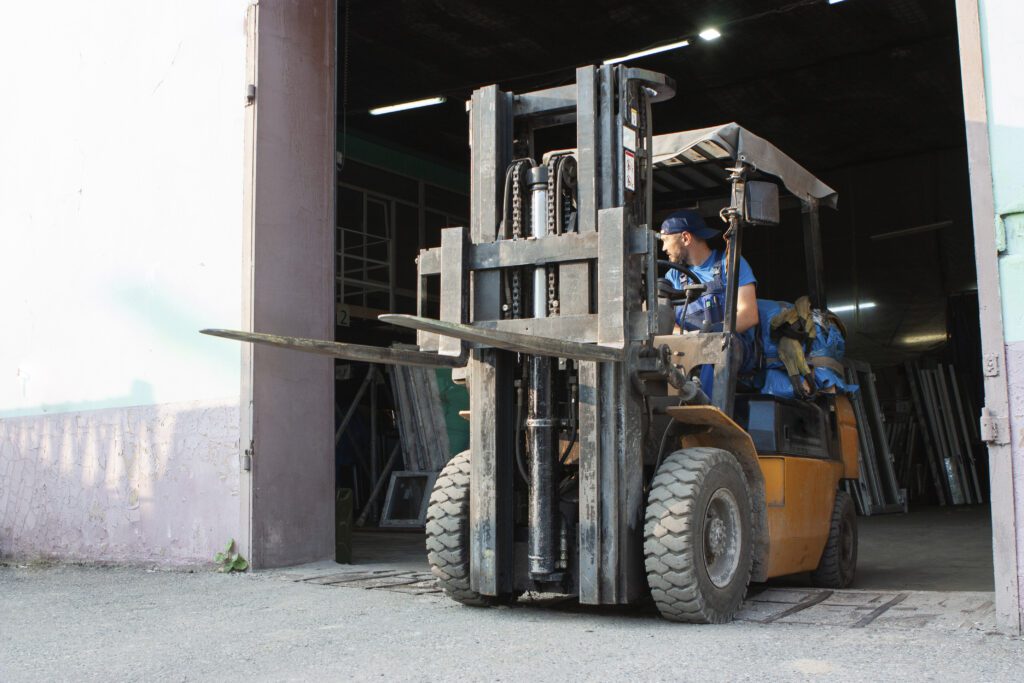
Statutory inspections and insurance are closely interlinked because both are focused on managing risk, preventing accidents, and protecting people and property. In many workplaces, carrying out statutory inspections is not only a legal requirement but also a condition of insurance cover. Insurers rely on these inspections to provide independent assurance that equipment is safe and that risks are being properly controlled.

Statutory inspections—such as LOLER thorough examinations, PSSR pressure system examinations, LEV testing under COSHH, and safety assessments under PUWER—are designed to identify defects that could lead to serious incidents. From an insurer’s perspective, these inspections reduce the likelihood of high-cost claims arising from equipment failure, injury, fire, or explosion. As a result, insurers often arrange or require inspections to be carried out by their own engineer surveyors or approved inspection bodies.

Insurance policies commonly include inspection clauses that require statutory examinations to be completed at specified intervals and that defects are acted upon within defined timescales. If an inspection identifies a dangerous defect and the duty holder fails to repair it or removes equipment from service, the insurer may consider this a breach of policy conditions. In the event of an accident, missing or overdue inspection reports can lead to reduced payouts or invalidated cover.

There is also a strong link with legal compliance. While insurers do not enforce health and safety law, they expect policyholders to comply with legislation such as LOLER, PSSR, COSHH, and PUWER. Proper inspection records demonstrate due diligence and can be crucial evidence if an incident is investigated by the HSE or taken to court. Insurers often use inspection findings to advise on risk improvement and loss prevention.

In summary, statutory inspections and insurance work hand in hand: inspections help reduce risk and prevent losses, while insurance provides financial protection if something goes wrong. Together, they encourage safer workplaces, support legal compliance, and help organisations manage both safety responsibilities and financial exposure effectively.

Insurance examination/ Statutory inspection FAQ's

No! So long as the company you are using are competent, and the person carrying out the examinations is classed as a competent person under the equipment’s relevant regulations (each regulation has slightly different wording), then you can use whoever you please, so long as you remain compliant.

In essence, yes. However, the terminology is incorrect. If your inspections provider who carries out your inspections are deemed competent under the equipment’s relevant regulations, and the reports satisfy each regulations format of reports (LOLER98 – schedule 1, PSSR2000 regulation 9 – format of reports, COSHH20002 regulation 9 – Local Exhaust Ventilation), then you are compliant.

Yes! Our examinations and reports at SEIS meet the requirements laid out by insurance brokers and each regulation. You can use SEIS as your trusted inspections partner.

Either call on 0330 0438191 or fill out our enquiry form on the bottom of our homepage, and we’ll get in touch.

Book Statutory Inspection Now

Name