LEV & Dust Extraction Inspection
Need your Local Exhaust Ventilation or Dust Extraction System examined in line with COSHH2002? Get a quote today to ensure you remain compliant.
Need your Local Exhaust Ventilation or Dust Extraction System examined in line with COSHH2002? Get a quote today to ensure you remain compliant.
Stay compliant. Stay safe. Book your examination today with SEIS – your trusted independent inspection & testing company in Boston.
Thorough examinations in line with COSHH2002 are legally required, periodic examinations, carried out on all local exhaust ventilation systems, fume extraction system, and dust extraction systems found within the workplace. The aim of these examinations is to ensure equipment and workplace safety, and overall compliance in line with UK regulations. In turn protecting your workforce from potential hazards, and you from non compliance.
Book LEV Inspection
Located on the east coast of England in Lincolnshire, Boston is a historic market town and important port with deep maritime, agricultural, and religious roots. Situated on the River Witham near The Wash, Boston has played a significant role in trade, migration, and regional industry for centuries.
Boston’s origins date back to at least the 11th century, but it rose to prominence in the medieval period as one of England’s most important ports. During the 13th and 14th centuries, it became a major centre for the wool trade, exporting goods to continental Europe. At its height, Boston was one of the wealthiest towns in England.
One of its most iconic landmarks is St Botolph’s Church, locally known as “The Stump.” Completed largely in the 14th and 15th centuries, the church tower dominates the town’s skyline and reflects Boston’s former prosperity.
Boston also has strong historical ties to early American colonisation. In the 17th century, religious dissenters from the area emigrated to New England. The American city of Boston is widely believed to have been named after this Lincolnshire town, highlighting its transatlantic influence.
By the 18th and 19th centuries, improvements to drainage and river systems transformed the surrounding Fens into highly productive agricultural land, reshaping the local economy around farming and food production.
Today, Boston’s economy is closely linked to agriculture and food processing, reflecting its position within some of the most fertile farmland in the UK. The surrounding area is a major producer of vegetables, potatoes, cereals, and flowers, supplying supermarkets nationwide.
Food manufacturing and packaging are among the town’s largest employment sectors, with numerous distribution centres operating in and around Boston due to its strategic access to eastern ports and major road networks.
The Port of Boston remains commercially active, handling cargo including timber, steel, and agricultural products. Its location near The Wash supports coastal shipping and contributes to regional logistics operations.
Renewable energy and engineering services are also growing sectors, supported by Lincolnshire’s broader investment in offshore wind and energy infrastructure along the east coast.
Retail, healthcare, education, and construction provide additional employment within the town itself, supporting a population that has diversified significantly in recent decades.
Modern Boston is a blend of historic architecture and industrial enterprise. Its medieval street layout sits alongside industrial estates, logistics hubs, and food production facilities. Ongoing regeneration initiatives aim to strengthen the town centre, improve flood defences, and attract further inward investment.
With its rich heritage, strong agricultural foundations, and evolving industrial base, Boston, Lincolnshire continues to play an important role in the economic landscape of eastern England.
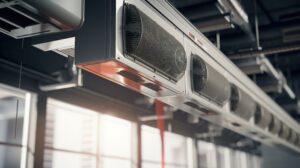
For these businesses, staying compliant with the Control of Substances Hazardous to Health 2002 (COSHH) is not just a legal requirement—it’s also about safeguarding your employees, protecting your business reputation, and ensuring your equipment remains safe and reliable.
COSHH regulations place strict duties on business owners and equipment operators. Any business in Boston that owns or operates pressure systems and pressure equipment must ensure that:
Fixed Local Exhaust Ventilation Systems and Mobile Extraction Equipment is safe to use.
Inspections are conducted by a competent and impartial person.
Failure to comply can lead to heavy fines, prosecution, and serious safety risks.
At SEIS, we know that every business in Boston – whether in heavy industry, healthcare, education, catering or automotive—depends on reliable, safe equipment. Regular LEV inspections & LEV testing reduces the risk of accidents, protects your workforce, and ensures smooth day-to-day operations. Compliance not only keeps you legal, but also demonstrates a strong commitment to employee safety.
Book LEV InspectionA thorough examination under COSHH is a detailed and legally required inspection of your local exhaust ventilation, fume extraction and dust extraction systems. Unlike simple checks or maintenance tasks, a COSHH examination must be performed by an impartial, competent person and results in an official Report of Thorough Examination.
How often your LEV system in Boston needs to be inspected & tested depends on the system conditions:
Under the Control of Substances Hazardous to Health Regulations 2002 (COSHH), Local Exhaust Ventilation (LEV) systems must be thoroughly examined and tested at regular intervals to ensure they continue to effectively control exposure to hazardous substances.
COSHH Regulation 9 requires that LEV systems are examined and tested by a competent person at least:
In addition to these statutory intervals, more frequent examinations may be required:
Where the LEV system is heavily used or operates in harsh conditions
If changes are made to processes, materials, or equipment
Following repairs, modifications, or if performance issues are suspected
COSHH also requires employers to ensure that LEV systems are:
Maintained in an efficient state
Kept in efficient working order and good repair
Subject to routine user checks and maintenance between statutory examinations
Records of LEV examinations and tests must be kept for at least five years and made available to enforcing authorities such as the HSE if requested.
In summary, LEV systems must be formally examined and tested at least every 14 months, every 6 months for lead and asbestos, or more frequently dependent on application or usage with additional checks and maintenance carried out as necessary to ensure continued effectiveness and legal compliance.
COSHH requires inspections to be carried out by a competent and independent person—not by the equipment supplier or operator. At SEIS, we meet these exact criteria. Our inspections are impartial, unbiased, and always in line with UK regulations.
Book LEV InspectionBusinesses in Boston use a vast range of ventilation and extraction equipment, and at SEIS we provide COSHH inspections across them all.
Spray booths
Welding hoods / Weld fume extraction
Downdraft Table
Local Exhaust Ventilation Systems
Fume cupboards
Fume extraction hoods
No matter the type of equipment on your site, SEIS ensures every examination is completed thoroughly, with full reports for your compliance records.
Book LEV Inspection
A Thorough examination of an Spray Booth ensures the system is satisfactory at removing contaminants, and the system is suitable in line with HSE - HSG 258 guidance - controlling airborne contaminants at work: A guide to Local Exhaust Ventilation (LEV). The system is thoroughly assessed structurally, airflow and air velocity measurements are taken to ensure your staff at protected from airborne contaminants.
A Thorough examination of an Welding / Soldering Hood ensures the system is satisfactory at removing contaminants, and the system is suitable in line with HSE - HSG 258 guidance - controlling airborne contaminants at work: A guide to Local Exhaust Ventilation (LEV). The system is thoroughly assessed structurally, airflow and air velocity measurements are taken to ensure your staff at protected from airborne contaminants.

A Thorough examination of an Fume Cupboard ensures the system is satisfactory at removing contaminants, and the system is suitable in line with HSE - HSG 258 guidance - controlling airborne contaminants at work: A guide to Local Exhaust Ventilation (LEV). The system is thoroughly assessed structurally, airflow and air velocity measurements are taken to ensure your staff at protected from airborne contaminants.t
A Thorough examination of an Downdraught Bench ensures the system is satisfactory at removing contaminants, and the system is suitable in line with HSE - HSG 258 guidance - controlling airborne contaminants at work: A guide to Local Exhaust Ventilation (LEV). The system is thoroughly assessed structurally, airflow and air velocity measurements are taken to ensure your staff at protected from airborne contaminants.
A Thorough examination of an Fixed LEV System ensures the system is satisfactory at removing contaminants, and the system is suitable in line with HSE - HSG 258 guidance - controlling airborne contaminants at work: A guide to Local Exhaust Ventilation (LEV). The system is thoroughly assessed structurally, airflow and air velocity measurements are taken to ensure your staff at protected from airborne contaminants.
A Thorough examination of an Mobile LEV System ensures the system is satisfactory at removing contaminants, and the system is suitable in line with HSE - HSG 258 guidance - controlling airborne contaminants at work: A guide to Local Exhaust Ventilation (LEV). The system is thoroughly assessed structurally, airflow and air velocity measurements are taken to ensure your staff at protected from airborne contaminants.
A Thorough examination of an Dust Extraction System ensures the system is satisfactory at removing contaminants, and the system is suitable in line with HSE - HSG 258 guidance - controlling airborne contaminants at work: A guide to Local Exhaust Ventilation (LEV). The system is thoroughly assessed structurally, airflow and air velocity measurements are taken to ensure your staff at protected from airborne contaminants.
A Thorough examination of an Receiving Hood ensures the system is satisfactory at removing contaminants, and the system is suitable in line with HSE - HSG 258 guidance - controlling airborne contaminants at work: A guide to Local Exhaust Ventilation (LEV). The system is thoroughly assessed structurally, airflow and air velocity measurements are taken to ensure your staff at protected from airborne contaminants.
SEIS is proud to support Boston businesses with impartial, expert inspections. We understand the local industries, from the port to food production, and we tailor our service to meet your needs.
As an independent inspection provider, we do not sell or repair pressure equipment. This means you can trust our assessments to be impartial, unbiased, and fully in line with COSHH regulations.
Our team of qualified surveyors have years of hands-on experience across multiple industries. They know exactly what to look for and how to ensure your business remains compliant without unnecessary disruption.
We understand that downtime costs money. That’s why we work around your production schedule, conducting inspections efficiently and professionally so your operations continue smoothly.
Book LEV InspectionWe make COSHH – LEV inspections & testing straightforward and hassle-free for local businesses.
Simply get in touch with our team, and we’ll arrange a time that works for you.
Our engineer surveyors visit your site and carry out thorough & in-service examinations with minimal disruption.
After each inspection, you’ll receive a clear, detailed report highlighting any defects and recommended actions.
We’ll manage your inspection schedule, reminding you before your next due date. Plus, you’ll have access to our online reporting portal, so your certificates are always at your fingertips.
Book LEV InspectionChoosing the right inspection provider makes all the difference. Here’s why Boston businesses trust SEIS:
From the engineering firms and food manufacturing to farms, schools, and garages, we understand the unique challenges businesses here face.
We provide inspections for:
Heavy industry
Education
Healthcare
Automotive
We pride ourselves on safety, compliance, and customer service—always putting your needs first.
In the 13th and 14th centuries, Boston was one of the most important trading ports in England, largely due to the booming wool export trade with Europe.
The American city of Boston is widely believed to have been named after Boston, Lincolnshire, by settlers who emigrated from the area in the 17th century.
St Botolph’s Church, known locally as “The Stump,” has a tower approximately 83 metres (272 feet) tall and can be seen for miles across the flat Fenland landscape.
In 1607, a group of religious separatists from the area were arrested near Boston while attempting to flee to the Netherlands, later becoming part of the Pilgrim movement to America.
Much of the land surrounding Boston was once marsh and wetland. Large-scale drainage projects between the 17th and 19th centuries transformed the area into some of the UK’s most fertile farmland.
The town’s port continues to operate today, handling cargo such as steel, timber, and agricultural products, supporting the regional economy.
The surrounding area is a major centre for vegetable production, including potatoes, brassicas, and salad crops, supplying supermarkets across the UK.
Boston’s market has operated for centuries and remains a central feature of the town, reflecting its long-standing role as a trading hub.
The River Witham runs through the town centre, historically enabling trade and transport between the Midlands and the North Sea.
Although not a city, Boston is one of the largest and most economically significant towns in Lincolnshire, particularly within the agricultural and food-processing secto
Booking with SEIS is quick and easy:
✅ Call our friendly team on 0330 0438191
✅ Fill in our online booking form
✅ Get your inspection arranged around your schedule
We’ll handle the rest, ensuring your equipment is inspected thoroughly, your compliance is up to date, and your workforce is kept safe.
A LEV inspection under COSHH, or thorough examination, is a legally required examination of local exhaust ventilation systems & equipment to ensure it is safe, compliant, and fit for use.
COSHH Regulation 9 requires that LEV systems are examined and tested by a competent person at least:
In addition to these statutory intervals, more frequent examinations may be required:
Where the LEV system is heavily used or operates in harsh conditions
If changes are made to processes, materials, or equipment
Following repairs, modifications, or if performance issues are suspected
Only a competent and impartial person can perform COSHH – LEV inspections. At SEIS, our independent surveyors meet these requirements.
COSHH applies to;
Yes. Whether you run a large factory or a small garage, any business operating an LEV system, fume extraction system, or dust extraction system, must comply with COSHH2002 regulations.
Non-compliance can lead to fines, legal penalties, equipment downtime, and serious safety risks for staff.
No. SEIS works around your schedule to complete inspections efficiently, minimising downtime and disruption.
You’ll get a digital Report of Thorough Examination by email and access via our secure online portal.
Yes. We manage your compliance schedule and send reminders before your equipment is due for inspection.
Yes. Alongside Boston, we also serve clients across the whole of the Lincolnshire region, and nationally, across the whole of the UK too!