LEV & Dust Extraction Inspection
Need your Local Exhaust Ventilation or Dust Extraction System examined in line with COSHH2002? Get a quote today to ensure you remain compliant.
Need your Local Exhaust Ventilation or Dust Extraction System examined in line with COSHH2002? Get a quote today to ensure you remain compliant.
Stay compliant. Stay safe. Book your examination today with SEIS – your trusted independent inspection & testing company in Brigg.
Thorough examinations in line with COSHH2002 are legally required, periodic examinations, carried out on all local exhaust ventilation systems, fume extraction system, and dust extraction systems found within the workplace. The aim of these examinations is to ensure equipment and workplace safety, and overall compliance in line with UK regulations. In turn protecting your workforce from potential hazards, and you from non compliance.
Book LEV Inspection
Brigg is a small market town in North Lincolnshire, situated on the River Ancholme. With roots stretching back to the medieval period, Brigg has long served as a local centre for trade, agriculture, and community life. Its name is derived from the Old Norse word “bryggja,” meaning bridge — a reference to its historic river crossing, which helped establish the town as a natural meeting and market point.
Brigg developed as a market settlement during the medieval era, receiving a royal charter in the 13th century that formalised its status as a market town. Its position on the River Ancholme allowed goods to be transported by water, connecting the town to larger trading centres across Lincolnshire and beyond.
Agriculture has always played a central role in Brigg’s growth. The surrounding Ancholme Valley provided fertile land for arable farming and livestock, and the town became an important collection and distribution point for grain and other produce. By the 18th and 19th centuries, improvements in drainage and river engineering enhanced farming productivity and trade.
Brigg is also known for the “Brigg Raft,” a prehistoric log boat discovered in the 19th century, now preserved in the North Lincolnshire Museum. The discovery highlights the area’s long history of settlement and river use, dating back thousands of years.
Throughout the Victorian period, Brigg maintained its traditional market-town character, with weekly markets and agricultural fairs forming a central part of community life — a tradition that continues today.
While Brigg retains its historic charm, its economy has evolved to reflect modern industry and regional development. Agriculture remains significant, with arable farming, food production, and agricultural services playing a key role in the surrounding rural economy.
Light industry and manufacturing are important employment sectors, supported by business parks and industrial estates on the outskirts of the town. Engineering services, food processing, packaging, and distribution operations are particularly prominent due to Brigg’s strategic location near major road networks, including the M180.
Retail and hospitality also contribute to the local economy. The town centre supports independent shops, cafés, and traditional markets, attracting visitors from surrounding villages. Tourism linked to heritage, countryside walking routes, and nearby attractions provides additional seasonal trade.
Brigg benefits from its proximity to larger employment centres such as Scunthorpe and Hull, allowing residents access to steel production, port operations, renewable energy, and logistics industries across the Humber region.
Today, Brigg balances its identity as a historic market town with its role in a modern regional economy. Its riverside setting, traditional marketplace, and surrounding farmland reflect centuries of agricultural heritage, while its transport links and business developments position it as a practical base for industry and commuting within North Lincolnshire.
With its blend of history, rural character, and evolving enterprise, Brigg remains an important part of the Lincolnshire landscape.
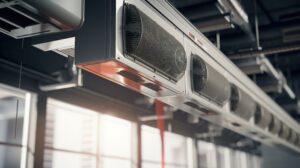
For these businesses, staying compliant with the Control of Substances Hazardous to Health 2002 (COSHH) is not just a legal requirement—it’s also about safeguarding your employees, protecting your business reputation, and ensuring your equipment remains safe and reliable.
COSHH regulations place strict duties on business owners and equipment operators. Any business in Brigg that owns or operates pressure systems and pressure equipment must ensure that:
Fixed Local Exhaust Ventilation Systems and Mobile Extraction Equipment is safe to use.
Inspections are conducted by a competent and impartial person.
Failure to comply can lead to heavy fines, prosecution, and serious safety risks.
At SEIS, we know that every business in Brigg – whether in heavy industry, healthcare, education, catering or automotive—depends on reliable, safe equipment. Regular LEV inspections & LEV testing reduces the risk of accidents, protects your workforce, and ensures smooth day-to-day operations. Compliance not only keeps you legal, but also demonstrates a strong commitment to employee safety.
Book LEV InspectionA thorough examination under COSHH is a detailed and legally required inspection of your local exhaust ventilation, fume extraction and dust extraction systems. Unlike simple checks or maintenance tasks, a COSHH examination must be performed by an impartial, competent person and results in an official Report of Thorough Examination.
How often your LEV system in Brigg needs to be inspected & tested depends on the system conditions:
Under the Control of Substances Hazardous to Health Regulations 2002 (COSHH), Local Exhaust Ventilation (LEV) systems must be thoroughly examined and tested at regular intervals to ensure they continue to effectively control exposure to hazardous substances.
COSHH Regulation 9 requires that LEV systems are examined and tested by a competent person at least:
In addition to these statutory intervals, more frequent examinations may be required:
Where the LEV system is heavily used or operates in harsh conditions
If changes are made to processes, materials, or equipment
Following repairs, modifications, or if performance issues are suspected
COSHH also requires employers to ensure that LEV systems are:
Maintained in an efficient state
Kept in efficient working order and good repair
Subject to routine user checks and maintenance between statutory examinations
Records of LEV examinations and tests must be kept for at least five years and made available to enforcing authorities such as the HSE if requested.
In summary, LEV systems must be formally examined and tested at least every 14 months, every 6 months for lead and asbestos, or more frequently dependent on application or usage with additional checks and maintenance carried out as necessary to ensure continued effectiveness and legal compliance.
COSHH requires inspections to be carried out by a competent and independent person—not by the equipment supplier or operator. At SEIS, we meet these exact criteria. Our inspections are impartial, unbiased, and always in line with UK regulations.
Book LEV InspectionBusinesses in Brigg use a vast range of ventilation and extraction equipment, and at SEIS we provide COSHH inspections across them all.
Spray booths
Welding hoods / Weld fume extraction
Downdraft Table
Local Exhaust Ventilation Systems
Fume cupboards
Fume extraction hoods
No matter the type of equipment on your site, SEIS ensures every examination is completed thoroughly, with full reports for your compliance records.
Book LEV Inspection
A Thorough examination of an Spray Booth ensures the system is satisfactory at removing contaminants, and the system is suitable in line with HSE - HSG 258 guidance - controlling airborne contaminants at work: A guide to Local Exhaust Ventilation (LEV). The system is thoroughly assessed structurally, airflow and air velocity measurements are taken to ensure your staff at protected from airborne contaminants.
A Thorough examination of an Welding / Soldering Hood ensures the system is satisfactory at removing contaminants, and the system is suitable in line with HSE - HSG 258 guidance - controlling airborne contaminants at work: A guide to Local Exhaust Ventilation (LEV). The system is thoroughly assessed structurally, airflow and air velocity measurements are taken to ensure your staff at protected from airborne contaminants.

A Thorough examination of an Fume Cupboard ensures the system is satisfactory at removing contaminants, and the system is suitable in line with HSE - HSG 258 guidance - controlling airborne contaminants at work: A guide to Local Exhaust Ventilation (LEV). The system is thoroughly assessed structurally, airflow and air velocity measurements are taken to ensure your staff at protected from airborne contaminants.t

A Thorough examination of an Downdraught Bench ensures the system is satisfactory at removing contaminants, and the system is suitable in line with HSE - HSG 258 guidance - controlling airborne contaminants at work: A guide to Local Exhaust Ventilation (LEV). The system is thoroughly assessed structurally, airflow and air velocity measurements are taken to ensure your staff at protected from airborne contaminants.
A Thorough examination of an Fixed LEV System ensures the system is satisfactory at removing contaminants, and the system is suitable in line with HSE - HSG 258 guidance - controlling airborne contaminants at work: A guide to Local Exhaust Ventilation (LEV). The system is thoroughly assessed structurally, airflow and air velocity measurements are taken to ensure your staff at protected from airborne contaminants.

A Thorough examination of an Mobile LEV System ensures the system is satisfactory at removing contaminants, and the system is suitable in line with HSE - HSG 258 guidance - controlling airborne contaminants at work: A guide to Local Exhaust Ventilation (LEV). The system is thoroughly assessed structurally, airflow and air velocity measurements are taken to ensure your staff at protected from airborne contaminants.
A Thorough examination of an Dust Extraction System ensures the system is satisfactory at removing contaminants, and the system is suitable in line with HSE - HSG 258 guidance - controlling airborne contaminants at work: A guide to Local Exhaust Ventilation (LEV). The system is thoroughly assessed structurally, airflow and air velocity measurements are taken to ensure your staff at protected from airborne contaminants.
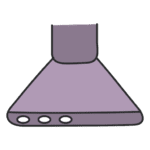
A Thorough examination of an Receiving Hood ensures the system is satisfactory at removing contaminants, and the system is suitable in line with HSE - HSG 258 guidance - controlling airborne contaminants at work: A guide to Local Exhaust Ventilation (LEV). The system is thoroughly assessed structurally, airflow and air velocity measurements are taken to ensure your staff at protected from airborne contaminants.
SEIS is proud to support Brigg businesses with impartial, expert inspections. We understand the local industries, from the port to food production, and we tailor our service to meet your needs.
As an independent inspection provider, we do not sell or repair pressure equipment. This means you can trust our assessments to be impartial, unbiased, and fully in line with COSHH regulations.
Our team of qualified surveyors have years of hands-on experience across multiple industries. They know exactly what to look for and how to ensure your business remains compliant without unnecessary disruption.
We understand that downtime costs money. That’s why we work around your production schedule, conducting inspections efficiently and professionally so your operations continue smoothly.
Book LEV InspectionWe make COSHH – LEV inspections & testing straightforward and hassle-free for local businesses.
Simply get in touch with our team, and we’ll arrange a time that works for you.
Our engineer surveyors visit your site and carry out thorough & in-service examinations with minimal disruption.
After each inspection, you’ll receive a clear, detailed report highlighting any defects and recommended actions.
We’ll manage your inspection schedule, reminding you before your next due date. Plus, you’ll have access to our online reporting portal, so your certificates are always at your fingertips.
Book LEV InspectionChoosing the right inspection provider makes all the difference. Here’s why Brigg businesses trust SEIS:
From the engineering firms and food manufacturing to farms, schools, and garages, we understand the unique challenges businesses here face.
We provide inspections for:
Heavy industry
Education
Healthcare
Automotive
We pride ourselves on safety, compliance, and customer service—always putting your needs first.
The name Brigg comes from the Old Norse word “bryggja,” meaning bridge — referring to the historic crossing over the River Ancholme that helped the town develop.
Brigg sits on the River Ancholme, which historically allowed goods to be transported by water and supported the town’s growth as a trading centre.
In the 13th century, Brigg was granted a royal charter, officially establishing it as a market town — a tradition that continues today with regular markets.
A prehistoric log boat known as the “Brigg Raft” was discovered in the town in 1886. It dates back to the Bronze Age and is now displayed at the North Lincolnshire Museum.
Although historically within Lincolnshire, Brigg is now administered by North Lincolnshire Council.
The surrounding Ancholme Valley contains rich agricultural land, making farming one of the area’s longstanding industries.
Brigg is located close to the M180 motorway, providing connections to major towns and cities across northern England.
Brigg benefits from proximity to industrial hubs such as Scunthorpe, known for steel production, and Hull, a major port city.
Brigg remains known for its popular street markets, which attract visitors from across the region and maintain its historic market-town identity.
Despite modern development, Brigg still features traditional architecture, narrow streets, and a central marketplace that reflect its medieval origins.
Booking with SEIS is quick and easy:
✅ Call our friendly team on 0330 0438191
✅ Fill in our online booking form
✅ Get your inspection arranged around your schedule
We’ll handle the rest, ensuring your equipment is inspected thoroughly, your compliance is up to date, and your workforce is kept safe.
A LEV inspection under COSHH, or thorough examination, is a legally required examination of local exhaust ventilation systems & equipment to ensure it is safe, compliant, and fit for use.
COSHH Regulation 9 requires that LEV systems are examined and tested by a competent person at least:
In addition to these statutory intervals, more frequent examinations may be required:
Where the LEV system is heavily used or operates in harsh conditions
If changes are made to processes, materials, or equipment
Following repairs, modifications, or if performance issues are suspected
Only a competent and impartial person can perform COSHH – LEV inspections. At SEIS, our independent surveyors meet these requirements.
COSHH applies to;
Yes. Whether you run a large factory or a small garage, any business operating an LEV system, fume extraction system, or dust extraction system, must comply with COSHH2002 regulations.
Non-compliance can lead to fines, legal penalties, equipment downtime, and serious safety risks for staff.
No. SEIS works around your schedule to complete inspections efficiently, minimising downtime and disruption.
You’ll get a digital Report of Thorough Examination by email and access via our secure online portal.
Yes. We manage your compliance schedule and send reminders before your equipment is due for inspection.
Yes. Alongside Brigg, we also serve clients across the whole of the Lincolnshire region, and nationally, across the whole of the UK too!