The Misconceptions Around Insurance Examinations
Need your equipment examined in line with LOLER98, PUWER98, PSSR2000 or COSHH2002 regulations? Get a quote today to ensure you remain compliant.
 What Are Insurance Examinations?
The term “insurance examination” is often used within the statutory inspection industry, and alongside being extremely generic, the term is also incorrect. The term is often used as there is a lack of understanding within industry, as to why your work equipment, lifting equipment, pressure equipment and LEV systems are thoroughly examined at regular intervals. Below is a breakdown as to why statutory inspections get labelled as “insurance examinations”, the correct terminology of the examinations, the regulations they’re examined under, and how and where insurance plays a part;
Why “insurance examinations”? and why is the terminology incorrect?
Statutory inspections (LOLER, PUWER, PSSR and COSHH (LEV systems)) are quite often included within the engineering insurance offered to you via your insurance broker. These inspection services, are typically an add on (much like breakdown cover on car insurance), which can be added or removed at the request of you (the client), so long as you remain compliant with each regulation.
The inspection company your broker then assigns the work to, will then be your assigned inspections provider for the term of said insurance. They then should carry out the thorough examinations of your equipment which falls under the following regulations: LOLER, PUWER, PSSR & COSHH. As these inspections are part of the package, this is why they are often called insurance examinations.
Correct Terminology
Although some people may think that terminology isn’t all that important, so long as you remain compliant with each regulation…. How can you truly ensure you are compliant, without knowing the correct terminology? Below is a break down of the correct terminology, to ensure you remain safe and compliant.
LOLER98 Thorough Examination
A thorough examination under the Lifting Operations and Lifting Equipment Regulations 1998 (LOLER 98) is a detailed and systematic inspection of lifting equipment carried out to ensure it is safe to use and legally compliant. It must be completed by a competent person, often an independent engineer surveyor, and is separate from routine maintenance or daily checks. The purpose is to identify defects that could lead to danger during lifting operations.
LOLER thorough examinations apply to lifting equipment and lifting accessories, including cranes, forklifts, hoists, passenger lifts, tail lifts, lifting beams, chains, slings, and shackles. The examination focuses on load-bearing parts, safety devices, brakes, chains, wire ropes, hydraulics, and structural components. Where necessary, the competent person may require testing or dismantling of components to properly assess their condition.
These examinations must be carried out at statutory intervals:
-
Every 6 months for lifting equipment used to lift people and for lifting accessories
-
Every 12 months for other lifting equipment
Alternatively, examinations can follow an Examination Scheme which sets out specific intervals based on risk, usage, and environment.
Following the examination, a written report must be produced and kept by the employer. If any dangerous defects are found, they must be reported immediately to the duty holder and, in some cases, to the enforcing authority. The equipment must not be used until the defect is repaired or the risk is removed.
 PSSR2000 Thorough Examination
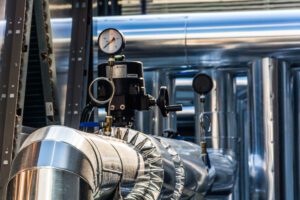
A thorough examination under the Pressure Systems Safety Regulations 2000 (PSSR 2000) is a formal, detailed safety inspection of a pressure system to confirm that it can continue to operate without risk of danger. It is carried out by a competent person, usually an independent engineer surveyor, and is a legal requirement for most pressure systems used at work. The examination is separate from routine maintenance and focuses specifically on preventing dangerous failures such as rupture or explosion.
PSSR applies to pressure systems containing relevant fluids, such as air compressors, pressure vessels, receivers, boilers, steam systems, autoclaves, and associated pipework and safety devices. The thorough examination checks the condition and integrity of pressure-containing parts, protective devices (including safety valves and pressure relief systems), and controls that prevent the system from exceeding its safe operating limits.
All pressure systems must have a Written Scheme of Examination (WSE) before being used. This document specifies which parts are examined, the examination methods, and the frequency of examination, based on the system’s design, operating conditions, and risk level. The competent person carries out the thorough examination strictly in line with this written scheme.
After the examination, a written report is issued detailing the system’s condition and any defects found. If a defect is identified that could give rise to danger, it must be reported immediately to the duty holder, and the system must not be used until the issue is made safe. In some cases, the enforcing authority may also need to be notified.
 PUWER98 Assessment Of Work Equipment
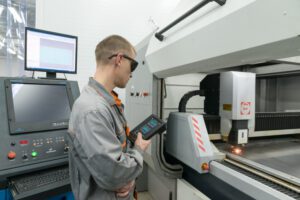
A PUWER 98 assessment of work equipment is a structured safety review carried out to ensure that machinery and tools used at work comply with the Provision and Use of Work Equipment Regulations 1998. Its purpose is to confirm that work equipment is safe, suitable for its intended use, properly maintained, and operated by competent people. Unlike LOLER or PSSR, PUWER does not usually require fixed inspection intervals, but it does require employers to assess risks and implement appropriate controls.
A PUWER assessment applies to all types of work equipment, including fixed machinery, production lines, presses, conveyors, woodworking machines, power tools, hand tools, and mobile equipment. The assessment examines factors such as machine guarding, emergency stop devices, control systems, isolation points, stability, lighting, signage, and access for maintenance. It also checks that equipment is appropriate for the environment in which it is used.
The assessment also considers how the equipment is used, not just its physical condition. This includes reviewing operator training, competence, supervision, safe systems of work, and the adequacy of instructions and manuals. Risks such as entanglement, crushing, ejection of materials, noise, vibration, and exposure to hazardous substances are identified and evaluated.
Where deficiencies are found, the PUWER assessment will recommend control measures or improvements, such as fitting additional guards, upgrading safety controls, improving maintenance regimes, or providing further training. Any equipment found to present an immediate danger must be removed from service until the risk is eliminated.
In simple terms, a PUWER 98 assessment helps employers demonstrate that their work equipment is legally compliant, fit for purpose, and safe throughout its lifecycle. It plays a key role in preventing machinery-related accidents and forms an essential part of a robust workplace health and safety management system.
 LEV Inspection Under COSHH2002
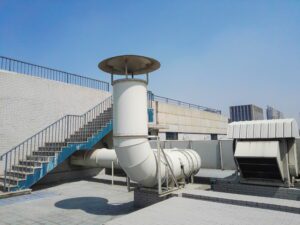
An LEV (Local Exhaust Ventilation) system inspection under the Control of Substances Hazardous to Health Regulations 2002 (COSHH 2002) is a statutory examination and test carried out to ensure that the LEV system is effectively controlling exposure to hazardous substances in the workplace. Its purpose is to confirm that the system is capturing and removing contaminants such as dusts, fumes, vapours, gases, mists, or smoke before they can be inhaled by workers.
COSHH requires employers to ensure that LEV systems are thoroughly examined and tested at least every 14 months (or more frequently if specified by a risk assessment). The inspection must be carried out by a competent person and goes beyond simple maintenance checks. It assesses whether the system is performing as originally designed and whether it remains suitable for the processes being controlled.
During an LEV inspection, key components are examined, including hoods and capture devices, ductwork, filters, fans, air cleaners, and discharge points. Airflow measurements are taken to confirm that the system is achieving the required capture velocities, and smoke tests may be used to visually demonstrate effective containment. The condition of the system, including signs of damage, blockages, corrosion, or leaks, is also assessed.
The examination also reviews user controls, indicators, and warning devices, as well as the system’s documentation. This includes checking that a logbook is maintained, that previous defects have been addressed, and that operators understand how to use the LEV system correctly. Changes to processes, materials, or layouts are considered to ensure the LEV remains fit for purpose.
Following the inspection, a written report must be provided, detailing the test results, system performance, and any defects identified. If serious deficiencies are found that could result in harmful exposure, immediate remedial action is required, and the system may need to be taken out of use. In summary, an LEV inspection under COSHH 2002 is a critical control measure that helps protect workers’ health, ensure legal compliance, and prevent long-term occupational illness.
The relationship between insurers and inspection bodies is covered in depth in our guide to insurer versus independent inspection, and brokers arranging inspections for clients can use our broker and service provider route.
How Are Statutory Inspections And Insurance Interlinked?
Statutory inspections and insurance are closely interlinked because both are focused on managing risk, preventing accidents, and protecting people and property. In many workplaces, carrying out statutory inspections is not only a legal requirement but also a condition of insurance cover. Insurers rely on these inspections to provide independent assurance that equipment is safe and that risks are being properly controlled.
Statutory inspections, such as LOLER thorough examinations, PSSR pressure system examinations, LEV testing under COSHH, and safety assessments under PUWER, are designed to identify defects that could lead to serious incidents. From an insurer’s perspective, these inspections reduce the likelihood of high-cost claims arising from equipment failure, injury, fire, or explosion. As a result, insurers often arrange or require inspections to be carried out by their own engineer surveyors or approved inspection bodies.
Insurance policies commonly include inspection clauses that require statutory examinations to be completed at specified intervals and that defects are acted upon within defined timescales. If an inspection identifies a dangerous defect and the duty holder fails to repair it or removes equipment from service, the insurer may consider this a breach of policy conditions. In the event of an accident, missing or overdue inspection reports can lead to reduced payouts or invalidated cover.
There is also a strong link with legal compliance. While insurers do not enforce health and safety law, they expect policyholders to comply with legislation such as LOLER, PSSR, COSHH, and PUWER. Proper inspection records demonstrate due diligence and can be crucial evidence if an incident is investigated by the HSE or taken to court. Insurers often use inspection findings to advise on risk improvement and loss prevention.
In summary, statutory inspections and insurance work hand in hand: inspections help reduce risk and prevent losses, while insurance provides financial protection if something goes wrong. Together, they encourage safer workplaces, support legal compliance, and help organisations manage both safety responsibilities and financial exposure effectively.
Insurance examination/ Statutory inspection FAQ's
No! So long as the company you are using are competent, and the person carrying out the examinations is classed as a competent person under the equipment’s relevant regulations (each regulation has slightly different wording), then you can use whoever you please, so long as you remain compliant.
In essence, yes. However, the terminology is incorrect. If your inspections provider who carries out your inspections are deemed competent under the equipment’s relevant regulations, and the reports satisfy each regulations format of reports (LOLER98 – schedule 1, PSSR2000 regulation 9 – format of reports, COSHH20002 regulation 9 – Local Exhaust Ventilation), then you are compliant.
Yes! Our examinations and reports at SEIS meet the requirements laid out by insurance brokers and each regulation. You can use SEIS as your trusted inspections partner.
Either call on 0330 0438191 or fill out our enquiry form on the bottom of our homepage, and we’ll get in touch.