
Air/Oil Receiver Inspection
Need your Air/Oil Receiver inspected in line with PSSR2000 regulations? Get a quote today to ensure you remain compliant.
Need your Air/Oil Receiver inspected in line with PSSR2000 regulations? Get a quote today to ensure you remain compliant.
Air and oil receivers are pressure vessels used to store compressed air or oil within mechanical and industrial systems. Their main purpose is to regulate pressure, smooth out fluctuations, and provide a steady supply of air or oil to equipment and machinery. By acting as a buffer between the compressor or pump and the end-use application, receivers improve system efficiency, reduce wear on equipment, and help maintain consistent operating conditions.
Air receivers are commonly used in compressed air systems across a wide range of industries. In manufacturing and engineering environments, they support pneumatic tools, automated machinery, and production lines by delivering stable air pressure. They are also essential in workshops, factories, and assembly plants where compressed air is used for powering tools, cleaning components, and operating control systems. By reducing pressure drops and compressor cycling, air receivers help improve energy efficiency and extend the lifespan of compressors.
Oil receivers are typically used in hydraulic systems and refrigeration systems, where they store and manage oil circulation. In industrial refrigeration, oil receivers collect and separate oil from refrigerant gases, ensuring proper lubrication of compressors while maintaining system efficiency. In hydraulic applications, oil receivers help stabilise pressure, accommodate changes in fluid volume, and support safe system operation, particularly in heavy-duty machinery and industrial processes.
Industries that commonly use air and oil receivers include manufacturing, food and beverage processing, automotive production, chemical processing, power generation, and construction. They are also vital in marine, offshore, and energy sectors, where reliable pressure control and fluid management are critical. Overall, air and oil receivers play a key role in maintaining safe, efficient, and reliable operation of compressed air and hydraulic systems across many industrial applications.
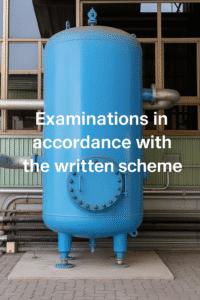
A PSSR (Pressure System Safety Regulations 2000) Thorough and In Service Examination of an air/oil receiver is a legally required examination to ensure the vessel is suitable for further service, and safe to used as part of the pressure system. If the vessel has a pressure x volume product greater than 250 bar/litres, and a relevant fluid is present within the system, or the vessel holds steam at any pressure, a written scheme of examination must be drawn up and certified. The competent person must carry out the examination in line with the written scheme of examination. Below is a details description of what is typically covered during a Thorough and In Service Examination;
 General Examination
Verification that the vessel complies with it’s manufacturers specifications and current legislation. Check all relevant documentation such as;
 Structural Integrity
 Auxiliary Components
 Electrical System
 System Protective Devices
 In Service Examination And Functional Testing
 Supplementary Tests
The competent person may use any, or all of the following supplementary tests to supplement their examination.
 Common Defects:
 Documentation and Reporting
After the inspection, the competent person will issue a PSSR Thorough Examination Report. This must include:
If any serious defects are found that pose immediate danger, they must be reported to the duty holder and the enforcing authority (e.g., HSE) immediately.
 Summary
An air/oil receiver PSSR inspection ensures that your pressure systems are safe, compliant, and fit for use. It helps prevent accidents caused by damaged vessels, poor equipment practices and ineffective system protective devices. While it does not replace regular maintenance, PUWER and PSSR inspections are a crucial legal requirement for keeping pressure safe and avoiding costly breakdowns or incidents.
Yes. Air receivers and oil separator vessels within compressor systems are pressure vessels and fall under the Pressure Systems Safety Regulations 2000 (PSSR 2000). They must undergo a statutory Thorough Examination in accordance with a Written Scheme of Examination.
The Pressure Systems Safety Regulations 2000 is UK legislation covering the safe design, operation, maintenance, and examination of pressure systems. It applies to compressed air systems, including air receivers and oil separator vessels inside compressor housings.
Yes. Many rotary screw compressors contain an internal oil separator vessel that operates under pressure. This vessel is subject to PSSR and must be included in the Written Scheme of Examination.
A Written Scheme of Examination is a legal document required under PSSR. It specifies:
Parts of the system to be examined
Nature and frequency of examinations
Testing requirements
Maximum allowable working pressure
Special precautions
Without a valid WSE, operating the pressure system is unlawful in the UK.
No. Routine servicing maintains performance and efficiency. A Thorough Examination under the Pressure Systems Safety Regulations 2000 is a statutory safety inspection focused on the integrity of the pressure vessel and safety devices. Both are required for full compliance.
The inspection must be completed by a competent person with suitable knowledge and experience of pressure systems. This is often an independent inspection engineer or specialist inspection body.
PSSR2000 thorough & in service examinations are a legal requirement in the UK for all pressure systems used at work and must be carried out in line with their written scheme of examination, and for good reason. These inspections ensure that pressure systems and their equipment, such as air receivers, pressure vessels, steam boilers, and other vessels containing a relevant fluid are safe to use, and fit for purpose. The nature of pressure systems and their associated vessels means that equipment failure can lead to catastrophic consequences, including serious injury, fatalities, and significant damage to property. By carrying out regular, scheduled thorough and in service examinations by a competent person, businesses can identify failure mechanisms, structural damage, or faulty system protective devices before they result in an incident.
 Legal Compliance and Risk Reduction: The most obvious advantage is staying compliant with health and safety law. Compliance avoids potential legal action, fines, or even prosecution. More importantly, it drastically reduces the risk of workplace accidents caused by lifting equipment failure.
 Improved Safety Culture: Regular inspections foster a proactive safety culture within the organisation. Employees are more likely to trust equipment and feel safe in their work environment when they know thorough checks are in place.
 Extended Equipment Lifespan: Regularly maintained and inspected equipment typically lasts longer. Examinations can identify early signs of damage or fatigue, allowing for preventative maintenance that avoids costly replacements or repairs.
 Insurance and Liability Protection: Insurers may require evidence of PSSR compliance in the event of an incident. Without valid inspection records, insurance claims could be denied or reduced, leaving the business liable for damages.
 Operational Efficiency: Detecting potential issues before they lead to equipment failure helps prevent unscheduled downtime. This keeps operations running smoothly and avoids the knock-on effects of delayed projects or interrupted workflows.
 Legal and Financial Consequences: Failing to comply with PSSR can result in enforcement action from the Health and Safety Executive (HSE), including improvement notices, prohibition notices, fines, or even prosecution. Legal battles and associated costs can be financially crippling.
 Increased Risk of Accidents: Equipment that hasn’t been thoroughly examined is far more likely to fail. Such failures can lead to injuries or fatalities, particularly in high-risk environments like construction or manufacturing. Beyond the human cost, the reputational damage to a business can be severe and long-lasting.
 Higher Repair and Replacement Costs: Neglecting inspections can allow minor issues to develop into major faults. These may require costly emergency repairs or complete equipment replacement, expenses that could have been avoided through routine examinations.
 Loss of Business and Clients: Clients often expect their contractors or suppliers to uphold strict safety standards. A failure to meet legal obligations like PSSR can result in lost contracts or blacklisting from future work, especially in regulated industries.
 Increased Insurance Premiums or Invalidated Coverage: As mentioned, insurers may increase premiums or deny coverage entirely if a business can't provide evidence of up-to-date PSSR compliance, placing a heavier financial burden on operations.
PSSR thorough and in service examinations aren’t just a box-ticking exercise - they are an essential component of a responsible, safety-first approach to using pressure systems. The benefits of compliance are wide-ranging, from protecting human life to reducing costs and maintaining operational integrity. Conversely, the risks of neglecting these inspections can be devastating on multiple levels.
 Key Points;
 Examinations must be carried out by a competent person - A competent person is someone with the right practical and theoretical knowledge and experience to conduct thorough examinations of pressure systems and their vessels and system protective devices.
Key Points; Key points; Examination Periods
Key points; A report of thorough examination must contain the following